Phase Change Materials — Thermal Softening Sheets
The preferred phase change thermal material India engineers select — Shin-Etsu PCS series. Solid, handleable sheets at room temperature that soften to a grease-like state at ~50°C, combining the positioning ease of a sheet with ultra-low BLT and pumpout resistance. 2.0–3.0 W/m·K, suitable for ceramic and aluminium base plates.
2.0–3.0
W/m·K
~50°C
Softening Point
0.08 cm²·K/W
Min Thermal Resistance
10–30µm
BLT After Compression
Overview
What Are Phase Change Materials?
Phase change materials (PCMs) are thermally conductive sheets that change from solid to a grease-like material at ~50°C. At room temperature they are solid and handleable — you can die-cut them, place them on a component and pre-assemble. Once the device heats up to ~50°C, the PCM softens and flows into microscopic surface asperities, dramatically reducing BLT and contact thermal resistance.
Three variants are available: PCS-CR-10 (non-insulated, 2.0 W/m·K, ceramic base plate use), PCS-LT-30 (non-insulated, 3.0 W/m·K, lowest BLT grade), and PCS-PL-30 (insulated with polyimide film, 1.7 W/m·K, aluminium base plate use). All are supplied in 300×400 mm sheets and roll formats.
- Sheet handling at room temperature + grease-like performance at operating temperature
- Softens at ~50°C — fills fine surface gaps and dramatically reduces BLT
- Excellent pumpout resistance — far more stable than conventional grease under thermal cycling
- PCS-LT-30 achieves BLT of 28 µm after compression for minimum contact resistance
- PCS-CR-10 achieves BLT of only 10 µm — the lowest in the series
- PCS-PL-30 adds polyimide film insulation for aluminium base plates requiring isolation
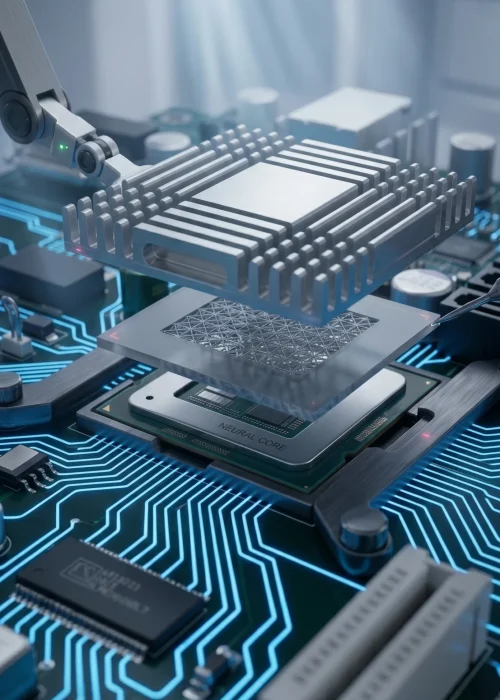
Application Scenes
Where Phase Change Materials Are Used
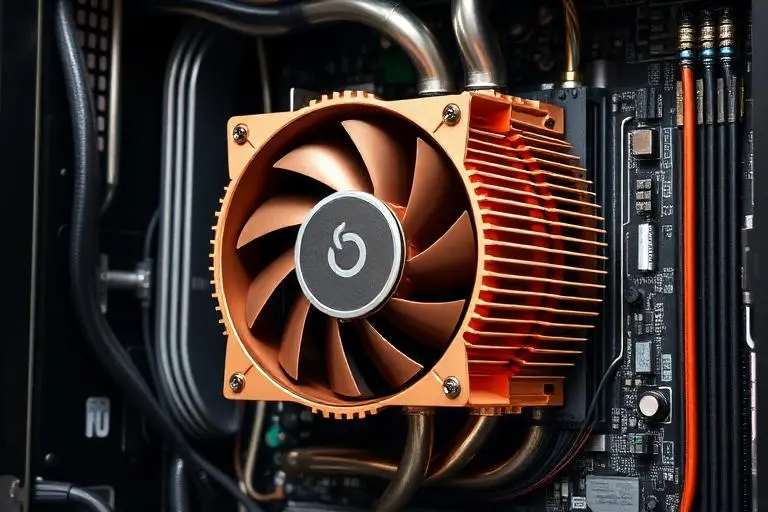
Server CPU / GPU TIM-2 Position
PCS-LT-30 (3.0 W/m·K, BLT 28 µm) is widely used as a TIM-2 material between the heat spreader lid and heatsink in server and workstation processors, where screws provide clamping force and the phase change on first boot fills micro-gaps.
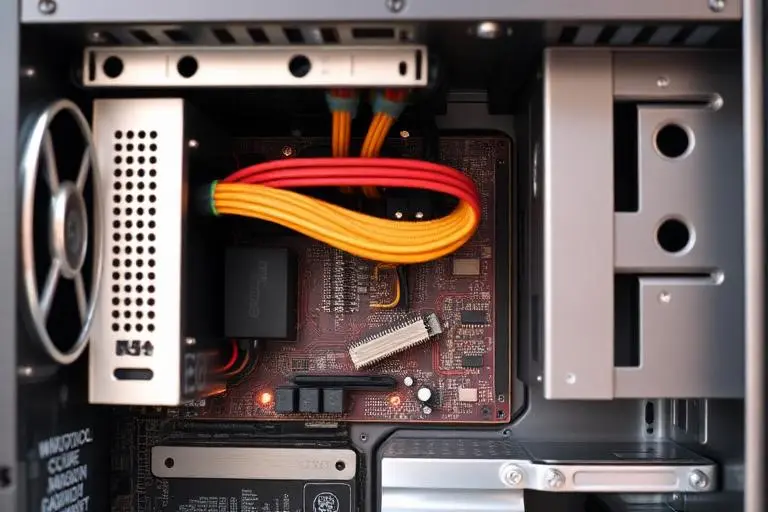
Optical Disc & PC Peripherals
PCMs are the TIM of choice for DVD / BD drives, PSUs and desktop PC chipsets where the screwed heatsink provides clamping force and the grease-like fill after first warm-up eliminates the need for any manual grease application on the production line.
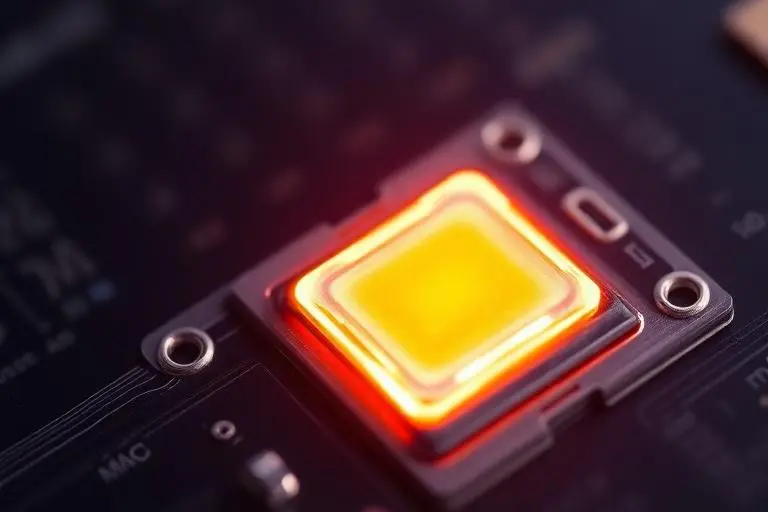
LED Light Source on Aluminium Base
PCS-PL-30 includes a polyimide insulating film for applications where the LED board mounts on a conductive aluminium substrate and electrical isolation is needed. The film maintains sheet integrity during assembly before the PCM softens.
Notebook PC & Consumer Electronics
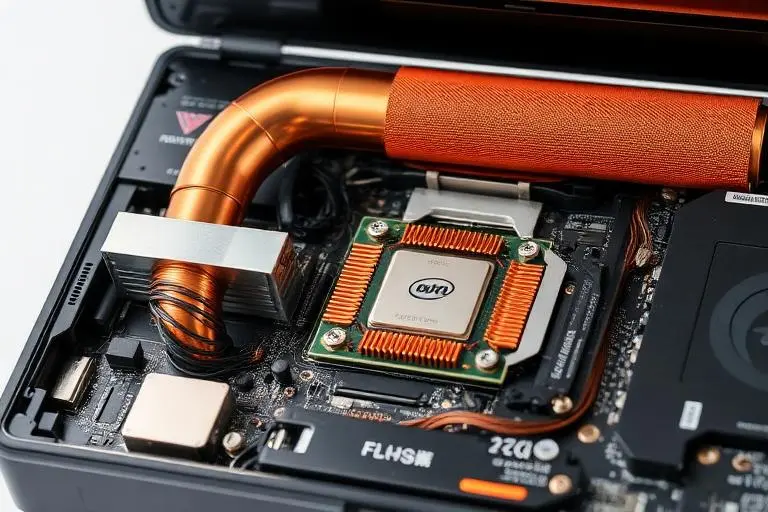
PCS-CR-10 (2.0 W/m·K, BLT 10 µm) provides the minimum contact resistance configuration for thin-profile laptop heat pipes and heatsinks, where the low BLT directly translates to lower CPU thermal resistance and higher boost performance.
Datasheet
General Properties — PCS Series
PCS Series properties (ASTM E-1461 thermal, Shin-Etsu method for BLT, JIS K 6249 electrical)
| ameter | PCS-PL-30 | PCS-CR-10 | PCS-LT-30 |
|---|---|---|---|
| Thermal conductivity (W/m·K) — ASTM E-1461 | 1.7* | 2.0 | 3.0 |
| Thermal resistance (cm²·K/W) — 50 psi / 100°C / 1 h | 0.73 | 0.08 | 0.11 |
| Type | Insulated (polyimide) | Non-insulated | Non-insulated |
| Color | White | White | Gray |
| Initial thickness (µm) | 120 | 200 | 120 |
| BLT after compression (µm) | 30 | 10 | 28 |
| Density at 23°C (g/cm³) | 2.7 | 2.9 | 2.4 |
| Dielectric breakdown voltage, air (kV) | 5.5* | — | — |
| Softening point (°C) | ~50 | ~50 | ~50 |
| Standard size / form | 320×400 mm, Roll | 300×400 mm, Roll | 300×400 mm, Roll |
| Flame resistance UL94 | V-0 equiv. | V-0 equiv. | V-0 equiv. |
Grade selection: Ceramic (insulating) base plates → PCS-CR-10 (lowest BLT 10 µm) or PCS-LT-30 (highest conductivity 3.0 W/m·K). Aluminium (conductive) base plates needing electrical isolation → PCS-PL-30. *PCS-PL-30 conductivity measured after polyimide film removal.
Grade Selector
Selecting the Right Phase Change Thermal Material India Grade
All PCS grades are handleable solid sheets at room temperature and reach grease-like performance above 50°C. Grade selection is driven primarily by target conductivity and base plate material compatibility.
| Parameter | PCS-TF2 | PCS-TF3 | PCS-HA |
|---|---|---|---|
| Thermal conductivity (W/m·K) | 2.0 | 3.0 | 3.0 |
| Phase change temperature (°C) | ~50 | ~50 | ~50 |
| Standard thickness (mm) | 0.1–0.25 | 0.1–0.25 | 0.1–0.25 |
| Compatible base plates | Aluminium, ceramic | Aluminium, ceramic | Aluminium, ceramic (halogen-free) |
| Key advantage | Lower cost, moderate conductivity | Higher conductivity at same BLT | Halogen-free formulation for stricter compliance |
| Pumpout resistance vs grease | Significantly better — no migration after thermal cycling |
Phase change material vs. thermal grease: Phase change thermal material India offers grease-like BLT and surface wetting after the device reaches operating temperature, but with the pre-assembly handling ease of a solid sheet. It is the preferred choice where grease dispensing is impractical or where pumpout over thousands of cycles is a concern — such as high-cycle-count servers, GPU coolers and power amplifiers.
FAQ
Phase Change Thermal Material India — Common Engineer Questions
At equivalent bond line thickness after reflow, PCS series phase change materials achieve thermal resistance values comparable to mid-range thermal grease. Their primary advantage is pumpout resistance: because the material re-solidifies when the device cools, it does not migrate out of the interface over thousands of thermal cycles the way low-viscosity grease can. This makes them particularly valuable in high-cycle-count applications such as server CPUs and power amplifiers.
No. PCS sheets are positioned on the heatsink or component at room temperature — the material is solid and fully handleable. The first power-on cycle raises the device temperature above 50°C, at which point the material softens, wets into the surface, and achieves its rated BLT. No pre-heating, dispensing equipment or mixing is required, which simplifies both manual and automated assembly.
Yes, with care. Once the device cools and the PCS material re-solidifies, the heatsink can be removed and the material can be peeled off and replaced. This makes PCS sheets suitable for field-serviceable assemblies. However, re-wetting quality on a second installation may be slightly lower than the first — for critical applications, replacing the sheet on rework is recommended. Contact Pantronics India for grade-specific rework guidance.
Need Help Selecting a Thermal Interface Material?
Pantronics India — authorised Shin-Etsu distributor — provides datasheets, samples & engineering support across India.
Request a QuoteGet Engineering Support
Website
- Home
- Our Principals
- COOLIT
About Us
- <span data-metadata=""><span data-buffer="">About us
- <span data-metadata=""><span data-buffer="">Our Customers
- <span data-metadata=""><span data-buffer="">Customers Testimonials
- Principal Testimonials
Get in touch
- Address: A - 9, Sector - 67, Noida, U.P. - 201301 (India)
- Email sales@pankaj.biz
- Call us +91 7840051401
Resources
- Blogs
- Download Centre