
The Ultimate Guide to Littelfuse MOSFETs (Si/SiC) in India
In the rapidly evolving landscape of power electronics, the demand for higher efficiency, power density, and reliability has never been greater. Engineers across India are increasingly turning to advanced semiconductor solutions to meet these challenges. At the forefront of this revolution are Littelfuse MOSFETs, offering a versatile portfolio of both traditional Silicon (Si) and cutting-edge Silicon Carbide (SiC) technologies.
This guide provides an in-depth look at MOSFETs (Si/SiC), exploring their types, specifications, and applications within the Indian market. Whether you are designing industrial motor drives, electric vehicle chargers, or renewable energy inverters, understanding the capabilities of Littelfuse’s product line is essential.
Pantronics India, as a premier Littelfuse distributor in India with over two decades of authorized partnership, is dedicated to bridging the gap between global technology and local innovation. We ensure that Indian industries have access to genuine, high-performance power semiconductors backed by expert technical support.
What are MOSFETs?
The Metal-Oxide-Semiconductor Field-Effect Transistor (MOSFET) is the fundamental building block of modern power electronics. It is a type of transistor used for amplifying or switching electronic signals. Unlike Bipolar Junction Transistors (BJTs) which are current-controlled devices, MOSFETs are voltage-controlled devices, making them significantly more efficient for switching applications.
How They Work
A MOSFET has three main terminals: Source (S), Drain (D), and Gate (G). The flow of current between the Source and Drain is controlled by the voltage applied to the Gate. An insulating layer of silicon dioxide prevents current from flowing into the Gate, resulting in extremely high input impedance. When sufficient voltage is applied to the Gate, it creates an electric field that modulates the conductivity of the channel, allowing current to flow with minimal resistance.
In the context of Power MOSFETs, these devices are designed to handle significant power levels. They act as high-speed switches in power conversion systems, turning on and off thousands of times per second to regulate voltage and current with minimal energy loss. Their ability to switch quickly and efficiently makes them critical for reducing the size and heat generation of power supplies, inverters, and motor controllers.
Types of MOSFETs
Understanding the nuances between different types of MOSFETs is crucial for selecting the right component for your design. The two primary categories dominating the high-power market today are Silicon (Si) and Silicon Carbide (SiC).
Automotive Qualified
Electric vehicles—from passenger cars to battery-powered forklifts—need efficient solid-state switches that can withstand heavy vibration and harsh operating conditions.
Silicon (Si) vs. Silicon Carbide (SiC)
Silicon (Si) MOSFETs have been the industry standard for decades. They are mature, cost-effective, and reliable for a wide range of voltages (typically up to 900V). However, as applications demand higher voltages and faster switching speeds, the physical limits of silicon are being reached.
Silicon Carbide (SiC) MOSFETs represent the next generation of power semiconductors. SiC is a wide-bandgap material, which allows these devices to operate at much higher voltages, temperatures, and switching frequencies than their silicon counterparts. SiC MOSFETs deliver superior efficiency, enabling smaller and lighter system designs
N-Channel vs. P-Channel
- N-Channel MOSFETs: These use electrons as the charge carriers. They have lower on-resistance (RDS(on)) for the same die size compared to P-Channel devices, making them the preferred choice for high-power applications. To turn them on, a positive voltage is applied to the Gate relative to the Source.
- P-Channel MOSFETs: These use holes as charge carriers. They typically have higher on-resistance but are easier to drive in high-side switching configurations because they do not require a gate drive voltage higher than the supply voltage.
Enhancement Mode vs. Depletion Mode
- Enhancement Mode: The device is “Normally Off.” No current flows until a gate voltage is applied. This is the most common type for power switching to ensure safety (failsafe off).
- Depletion Mode: The device is “Normally On.” Current flows even with zero gate voltage, and a negative voltage is required to turn it off. These are used in specialized applications like startup circuits or constant current sources.
Littelfuse MOSFET Product Families
Littelfuse offers a comprehensive portfolio tailored to meet diverse power requirements. As a leading MOSFET distributor in India, Pantronics India stocks and supports these key product families:
A. Silicon (Si) MOSFETs
The Littelfuse portfolio of Silicon MOSFETs is renowned for its robustness and efficiency, particularly the Ultra Junction technology.
X-Class Ultra Junction Series
These Power MOSFETs feature a charge compensation principle and proprietary process technology, resulting in significantly reduced on-resistance and gate charge. They are engineered for high-efficiency, high-power density applications.
- Voltage Range: 500V to 900V
- Key Benefits: Lower conduction and switching losses, reduced EMI, and easier thermal management
X2-Class Ultra Junction Series
Building on the success of the X-Class, the X2-Class offers even lower Rds(on) and improved switching dynamics. They are optimized for soft-switching resonant applications and hard-switching topologies.
X4-Class Ultra Junction Series
The latest innovation in the silicon lineup. The X4-Class pushes the boundaries of power density. Notably, recent additions include devices capable of 200V and up to 480A in the advanced SMPD-X package. This allows designers to replace multiple paralleled MOSFETs with a single device, simplifying circuit layout and improving reliability.
B. Silicon Carbide (SiC) MOSFETs
For applications demanding the highest efficiency and performance, the Littelfuse SiC MOSFET LSIC1MO series is the definitive choice.
Series: LSIC1MO (1200V and 1700V)
These industrial-grade SiC MOSFETs exhibit extremely low gate charge and output capacitance, optimized for high-frequency switching. They provide excellent power cycling characteristics, crucial for harsh industrial environments in India.
C. MOSFET Modules
For very high-power applications, Littelfuse offers MOSFET modules that combine power MOSFETs with fast recovery diodes (FREDs) or SiC Schottky diodes. These modules function as low-resistance solid-state switches, offering high power density in a robust industrial package, simplifying thermal management and assembly.
Key MOSFET Parameters and Specifications
When selecting a MOSFET in India for your project, evaluating these key parameters is essential:
- Voltage Rating (VDSS): The maximum drain-to-source voltage the device can withstand without breaking down. Littelfuse offers ranges from 200V up to 1700V (SiC).
- Current Rating (ID): The maximum continuous drain current. The portfolio ranges from 14A up to a massive 480A.
- On-Resistance (RDS(on)): The resistance between Drain and Source when the MOSFET is fully on. Lower values (e.g., 25mΩ) mean less heat and higher efficiency.
- Gate Charge (Qg): The amount of charge required to turn the MOSFET on. Lower Qg enables faster switching and reduces gate drive power requirements.
- Thermal Characteristics (RthJC): Indicates how effectively the device dissipates heat from the junction to the case.
- Package Types:
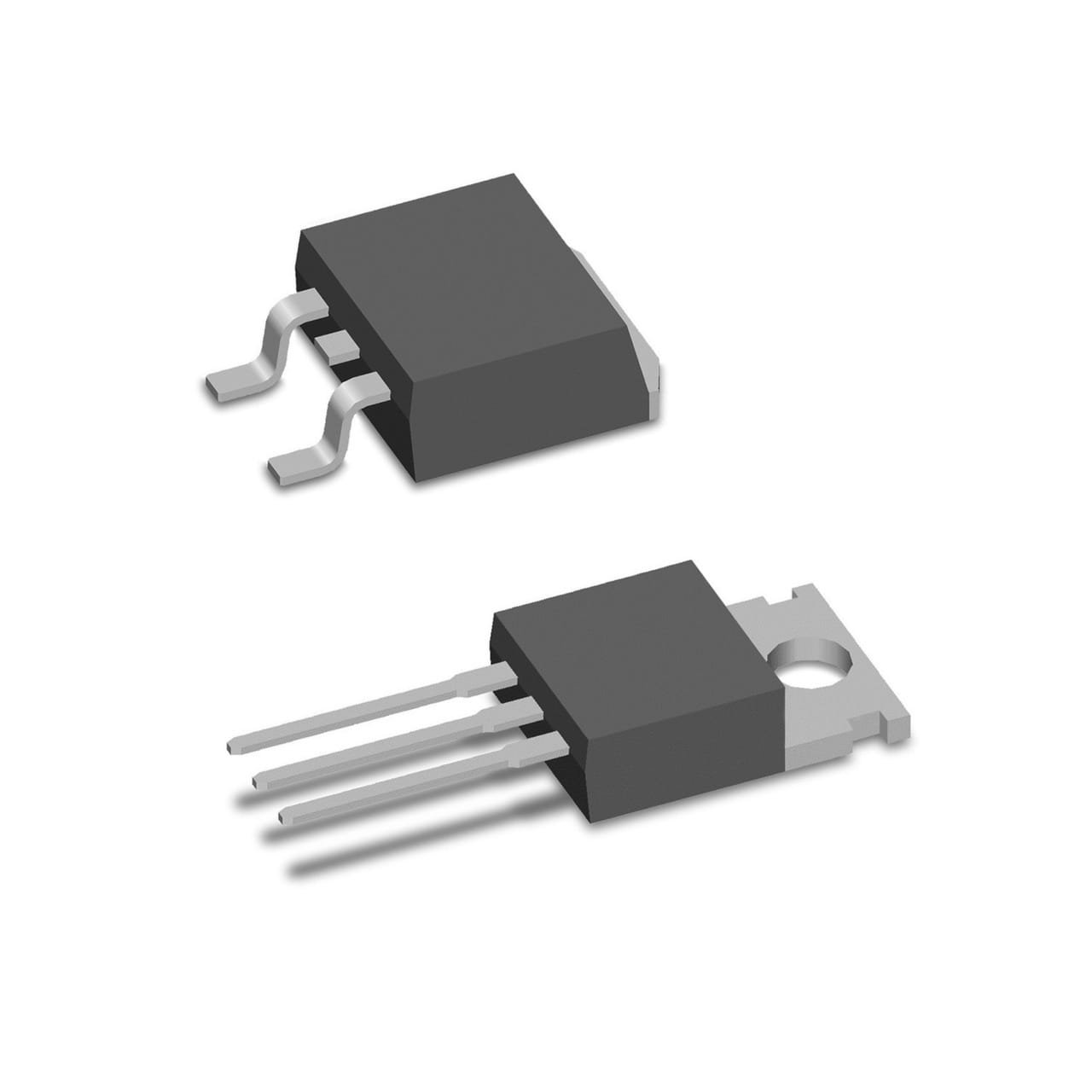
- TO-220 / TO-247: Standard through-hole packages for good thermal performance.
- TO-247-4L: Includes a Kelvin Source pin for high-speed SiC switching.
- SMPD-X: A surface-mount package with isolated backside, offering high power density.
Si MOSFET vs. SiC MOSFET: Comprehensive Comparison
Choosing between Silicon and Silicon Carbide depends on your specific application needs regarding cost, efficiency, and size. As a Littelfuse distributor in India, we help customers make this choice daily.
Conclusion
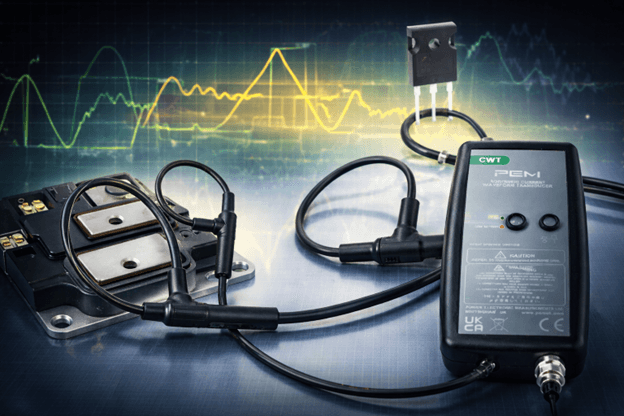
To design and validate high-speed electronics (from switching devices to semiconductor devices), accurate current measurement is essential. With an increase in the number of switching frequencies and technologies like GaN and SiC, engineers much utilize Rogowski Oscilloscope Current Probes (ROCP) that offer high bandwidths, fast response times, and excellent immunity to electrical noise. The CWTMini50HF provides a 50 MHz bandwidth, an ultra-narrow shielded coil, and a non-intrusive Clip-Around Design, allowing for the clean and exacting measurement of fast transients and switching current results.
Measurements can avoid saturation issues while minimizing circuit disruptions; therefore, Rogowski coil current probes (CWT) provide current measurement solutions that will work now and in the future for applications such as semiconductor loss analyses to power converter diagnostic applications. Whether measuring low AC ripple currents or measuring high amplitude pulsed waveforms, the CWTMini50HF is capable of offering the accuracy and security needed in sophisticated R&D environments.
In India, as an authorized dealer of Power Electronic Measurements, Pantronics India supplies a full range of Rogowski Current Sensors that include CWT, CWT HF, CWT Mini, and CWT Ultra-Mini, and provides technical assistance to engineers to find appropriate current probe calibration equipment for routine conduct current measurement(s).
For engineers seeking accurate, wide-band Rogowski Coil Current Probes and professional application support in India, Pantronics India Pvt Ltd is your trusted partner
Frequently Asked Questions
Rogowski Oscilloscope Probes measure high-voltage, low-frequency (HVLF) current AC, Pulsed or Rapid switching currents without physically breaking the circuit. As such, Rogowski Probes are ideal tools for the testing of Power/Power Electronics (e.g., Inverters) and for the Analysis & Testing of Semiconductors and their High Speed Switching (High-speed switching requires both a high bandwidth probe and high accuracy).
Unlike CTs, Rogowski Coil Current Probes will not saturate, and are capable of measuring very large AC and/or Pulsed currents over a wide frequency range. Whereas CTs are generally bulky and heavy, Rogowski Coil Probes are Lightweight, Flexible, and better suited for Fast Transient, and High-Frequency measurements.
The CWTMini50HF is designed for measuring AC and high-frequency Pulsed Direct Current (DC) currents. It has particularly good capabilities for accurately capturing the current waveform of DC-offset currents such as Ripple Currents in Capacitors or Switching Currents in Power Converters.
Yes! The CWTMini50HF has a bandwidth of 50 MHz and is designed with excellent immunity against dV/dt (rate of rise of voltage with time) enabling it to make rapid-switching measurements for both SiC (Silicon Carbide) and GaN (Gallium Nitride) Power Semiconductors.
Yes! The position of the magnetic field surrounding a conductor may have a significant influence (although Slight) on the accuracy of your measurements. For example, if the conductor is centred, accuracy would be ±0.2%, whereas if the conductor is off-centre, there may be a Typical variation of 1-2%. This will depend on the diameter of the conductor
Yes! The CWTMini50HF coil has a peak insulation value of up to 5kV depending on the thickness of the coil, and therefore can be safely used to measure current in high voltage power electronics.
The Rogowski coil and cable are rated for operational temperatures between -40 °C to +125 °C. This allows them to be used in both demanding lab and industrial settings, while the electronics associated with the Rogowski coils are rated to standard lab conditions.
You can find PEM Rogowski Oscilloscope Current Probes, including the CWTMini50HF, at Pantronics India, which is an authorized distributor for these products, offering local support and application assistance.

Expert Technical Support
CWTMini50HF Rogowski Oscilloscope Current Probes at Pantronics India are supported by experienced application professionals for high-frequency, high-dV/dt power-electronics measurements.
Ms. Sunita Joshi
(Passive Components & Test & Measurement Expert)
Mail ID: s.joshi@pantronicsindia.com