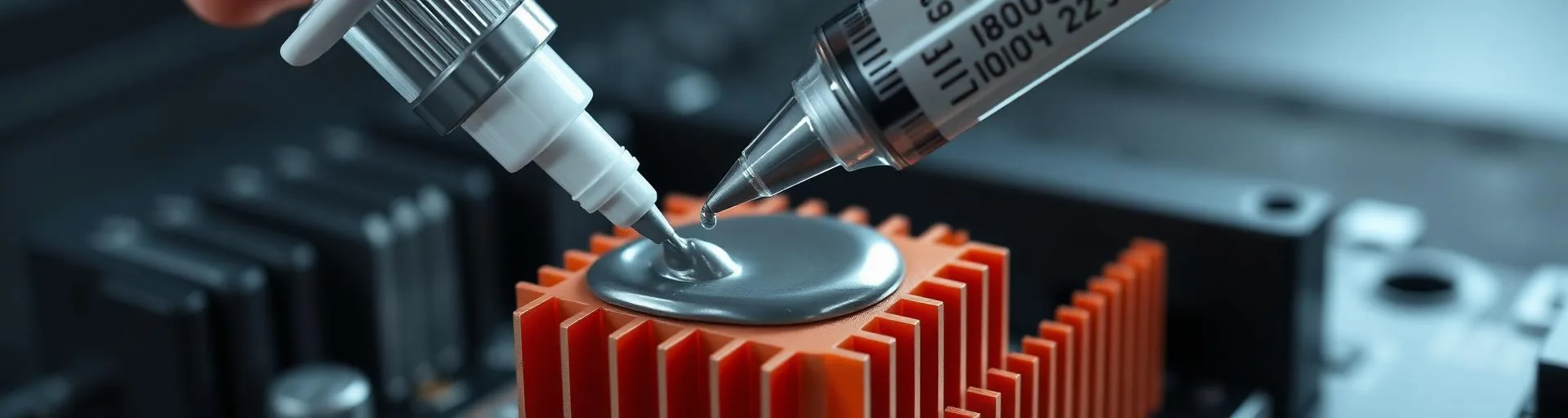
Thermal Interface Oil Compounds (Thermal Grease)
The industry-standard thermal grease India solution — Shin-Etsu G-Series silicone oil compounds achieve ultra-thin BLT through outstanding surface wetting. Up to 4.0 W/m·K, fully reworkable, pumpout-resistant and available in solvent-diluted formulations for controlled coating to 10 µm BLT.
1.3–4.0
W/m·K
3–29
mm²·K/W Thermal Resistance
10–75µm
−40 to +200°C
Overview
What Are Thermal Interface Oil Compounds?
G-Series oil compounds are thermally conductive silicone-oil greases filled with high ratios of conductive ceramic particles. When applied as a thin layer between a chip and heatsink, they wet the mating surfaces intimately, displacing air and achieving bond-line thicknesses as low as 10 µm — far thinner than any pad or sheet format.
The range covers seven grades: standard pump-dispensable greases (G-775, G-777, G-779), a condensation-cure type that cures to a soft solid for added mechanical stability (G-1000), and three solvent-diluted types (G-776, G-787, G-790) that can be applied by screen print, spin coat or dip coat to achieve precisely controlled ultra-thin films before the solvent evaporates.
- Highest thermal conductivity in the Shin-Etsu silicone TIM range — up to 4.0 W/m·K (G-787)
- Excellent wettability — BLT as low as 10 µm (G-776, G-790)
- Fully reworkable — clean, reapply, reassemble
- G-1000 condensation-cure type cures to soft Asker C 40 solid — resists pump-out under vibration
- G-776/787/790 solvent-diluted types: apply by screen / spin / dip coat, solvent evaporates leaving a controlled thin film
- LMW siloxane <100 ppm on G-777 through G-790
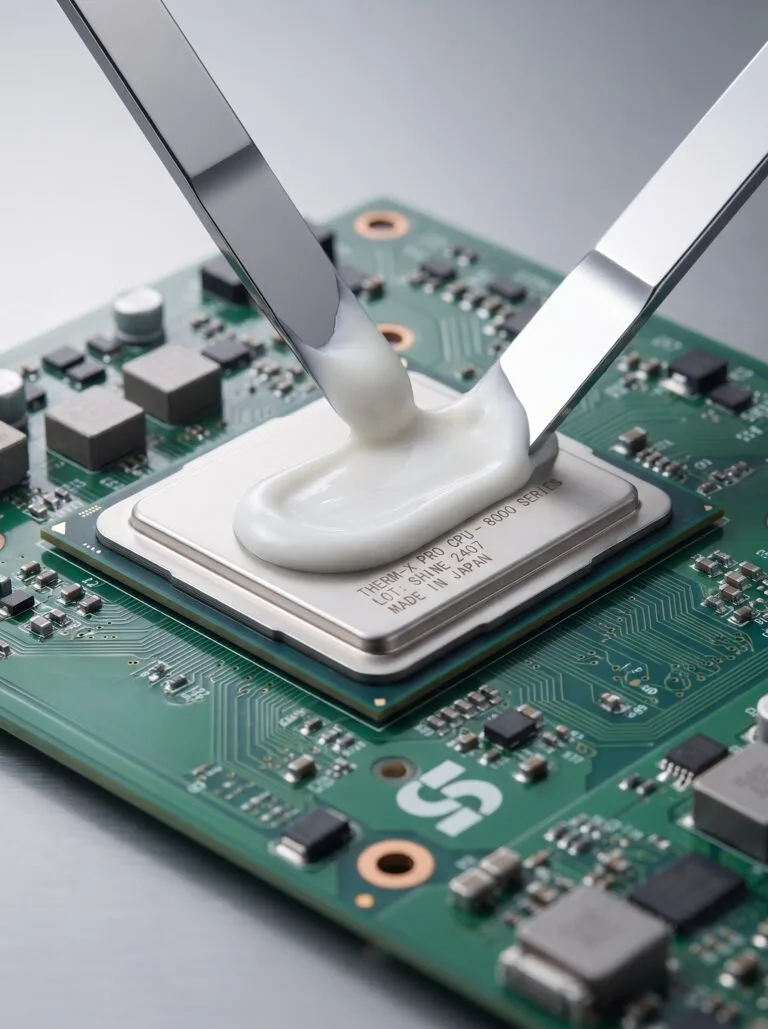
Application Scenes
Where Silicone Soft Pads Are Used
Soft pads span consumer electronics, industrial power, EV batteries and server infrastructure — anywhere surfaces are uneven or tolerance stack-up prevents sheets from maintaining consistent contact.
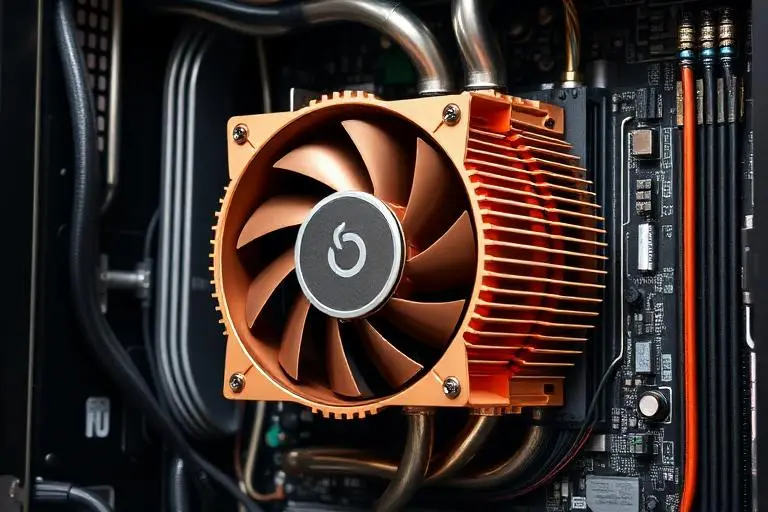
Server / Workstation CPU Cooling (TIM2)
G-777 (3.3 W/m·K, 56 µm BLT) and G-779 (3.0 W/m·K, 25 µm BLT) are standard TIM2 compounds for server CPUs and workstation processors, delivering low thermal resistance at the IHS-to-heatsink interface where screws provide clamping force.
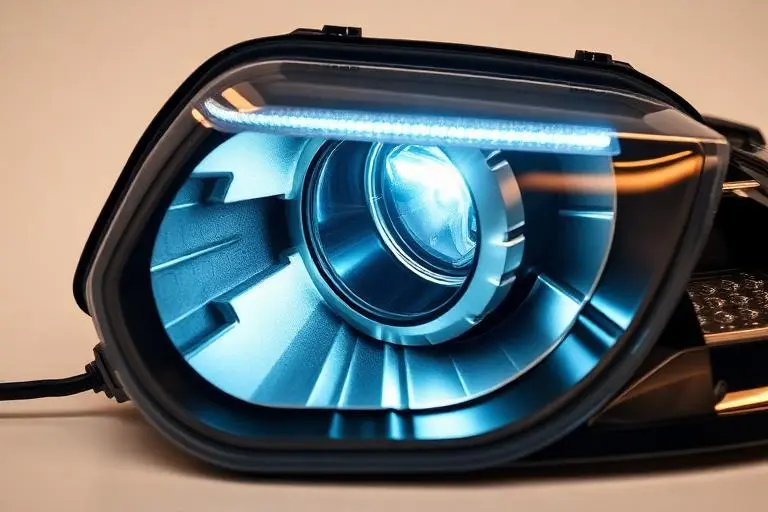
Automotive LED Headlamp
G-775 (3.6 W/m·K) is used between LED light sources and aluminium reflector housings in automotive headlamps, where the screw-fastened module and tight BLT specification (75 µm) make grease application by dispensing robot practical in high-volume production.
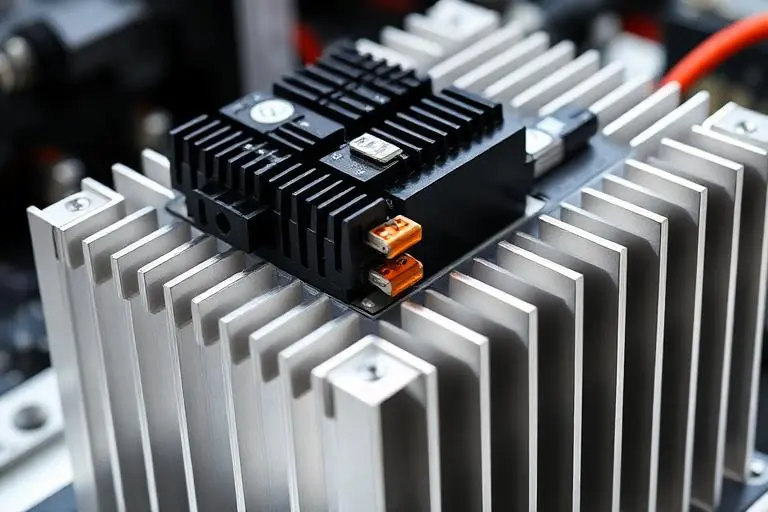
Power Modules with Vibration (G-1000)
G-1000 condensation-cure compound cures to Asker C 40 hardness — a soft solid — which eliminates the pump-out risk in power modules subject to vibration or mechanical shock, while maintaining reworkability through mechanical removal of the cured film.
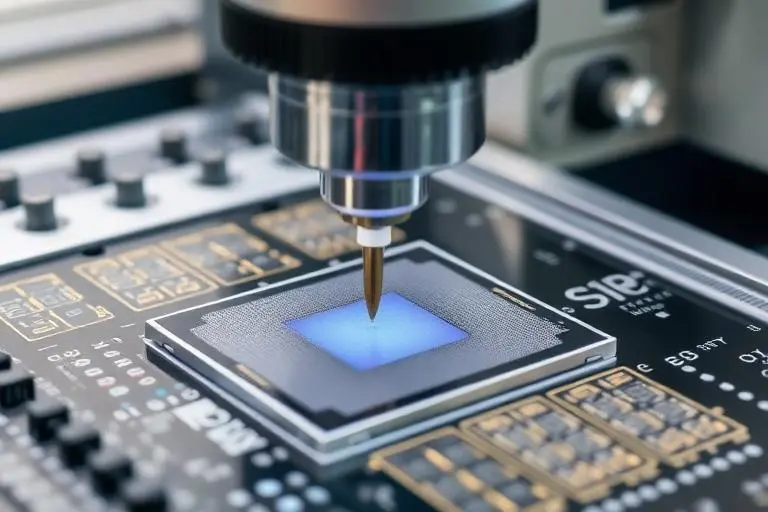
Ultra-Thin Film Coating (Solvent Types)
G-776, G-787 and G-790 are solvent-diluted greases applied by screen printing, spin coating or dip coating to achieve precisely controlled films down to 10 µm after solvent evaporation — used in high-density package stacking, telecom modules and advanced server designs.
Datasheet
General Properties — G-Series Oil Compounds
General properties — ISO 22007-2 (thermal), Shin-Etsu method (BLT / thermal resistance), JIS K 6249 (electrical). All grades: white grease appearance.
| Parameter | G-775 | G-777 | G-779 | G-1000 | G-776 | G-787 | G-790 |
|---|---|---|---|---|---|---|---|
| Thermal conductivity (W/m·K) | 3.6 | 3.3 | 3.0 | 2.4 | 1.3* | 4.0* | 3.2* |
| Thermal resistance (mm²·K/W) | 25 | 21 | 10 | 29 | 7 | 10 | 3 |
| BLT (µm) | 75 | 56 | 25 | 50 | 10 | 30 | 10 |
| Specific gravity at 25°C | 3.4 | 3.2 | 3.2 | 3.04 | 2.9 | 3.48 | 3.3 |
| Viscosity at 25°C (Pa·s) | 500 | 140 | 160 | 80 | 60* | 70* | 90* |
| Post-cure hardness (Asker C) | — | — | — | 40 | — | — | — |
| Dielectric bkdn 0.25 mm (kV) | 2.5 | 3.2 | 3.2 | 3.6 | 2.9 | 2.4 | 2.5 |
| Use temperature (°C) | −40–+150 | −40–+200 | −40–+200 | −40–+180 | −40–+200 | −40–+200 | −40–+200 |
| LMW siloxane (ppm) | <300 | <100 | <100 | <100 | <100 | <100 | <100 |
* G-776, G-787, G-790 values measured after solvent evaporation. Viscosity values for solvent types are before evaporation. LMW siloxane controlled — G-777 through G-790 all <100 ppm.
Grade Selector
Choosing the Right Thermal Grease India Grade
The G-Series spans from general-purpose 1.3 W/m·K compounds to high-conductivity 4.0 W/m·K specialist grades, with solvent-diluted versions for ultra-thin coating. This guide helps you specify the right thermal grease India grade for your application and process.
| Grade | Conductivity (W/m·K) | Viscosity | Best Application |
|---|---|---|---|
| G-747 | 1.3 | Low (easy spreading) | General purpose, CPU, power transistors — good balance of cost and performance |
| G-765 | 1.8 | Medium | Higher insulation resistance required; servers, power supplies |
| X-23-7762 | 3.6 | High (thixotropic) | High-power semiconductors, IGBT modules — maximum conductivity |
| X-23-7783D | 4.0 | Paste (solvent-dilutable) | Automated screen or stencil printing; ultra-thin BLT down to 10 µm |
| SC-102 (diluted) | 0.8 | Very low (liquid) | Fan-bearing lubrication and light thermal interface applications |
Applying thermal grease India tips: Dispense a small centre dot or cross-pattern and let clamp pressure spread it to the full interface area — do not pre-spread manually as this traps air. For screen-printing, X-23-7783D diluted with solvent achieves the necessary viscosity for stencil processes at 25–50 µm wet film.
FAQ
Thermal Grease India — Common Engineer Questions
Thermal grease and thermal paste are used interchangeably in the industry; both describe a non-curing, viscous compound that is dispensed between a heat-generating component and a heatsink to fill microscopic surface irregularities. Shin-Etsu calls its products “oil compounds” internally. The distinction that matters is conductivity (1.3–4.0 W/m·K for G-Series), viscosity for the dispensing process, and the presence or absence of electrically conductive fillers — G-Series compounds are electrically insulating.
All silicone oil compounds carry some risk of migration at elevated temperatures under repeated thermal cycling. Shin-Etsu G-Series compounds have controlled LMW siloxane content and use high-molecular-weight silicone oil bases to minimise pumpout compared to generic compounds. For applications requiring absolute pumpout resistance over thousands of cycles — such as high-cycle power electronics or long-life server hardware — phase change materials (PCS series) or gap fillers (SDP series) are better choices.
The X-23-7783D grade can be diluted with toluene or other compatible solvents to adjust viscosity for screen printing, stencil printing or automated syringe dispensing. After solvent evaporation, the remaining film achieves BLT as low as 10 µm under assembly clamping — making it the preferred choice for high-volume automated CPU and GPU lid attachment processes. Standard G-747 and G-765 grades suit manual dot-dispense or desktop pneumatic dispensers.
With care — verify the grease does not migrate onto nearby solder joints or connector surfaces. For LMW-sensitive designs, specify X-23-7783D or G-765 which have lower volatile siloxane content. For applications where any grease migration would cause field failures, the PCS phase change series is the more appropriate choice, as it remains solid when the device is off and leaves no residue at unpowered pads or connectors.
Need Help Selecting a Thermal Interface Material?
Pantronics India — authorised Shin-Etsu distributor — provides datasheets, samples & engineering support across India.
Request a QuoteGet Engineering Support
Website
- Home
- Our Principals
- COOLIT
About Us
- <span data-metadata=""><span data-buffer="">About us
- <span data-metadata=""><span data-buffer="">Our Customers
- <span data-metadata=""><span data-buffer="">Customers Testimonials
- Principal Testimonials
Get in touch
- Address: A - 9, Sector - 67, Noida, U.P. - 201301 (India)
- Email sales@pankaj.biz
- Call us +91 7840051401
Resources
- Blogs
- Download Centre