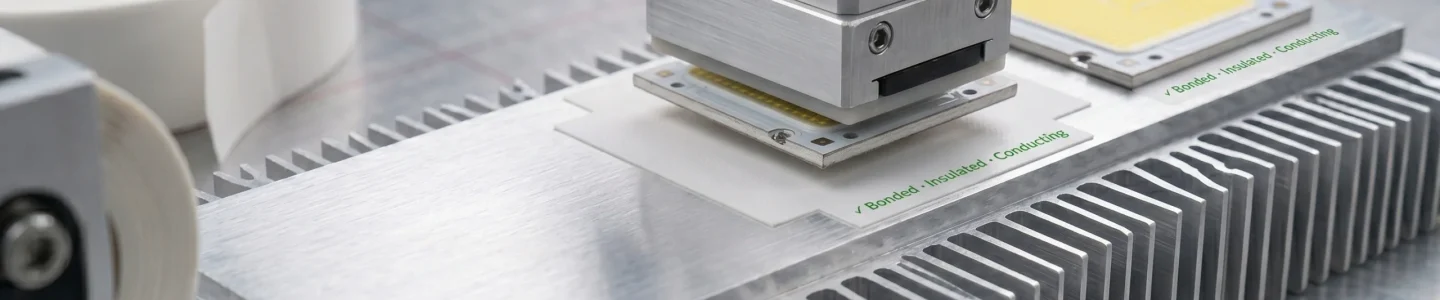
Double-Sided Thermal Interface Silicone Tapes
The leading thermal interface tape India solution — Shin-Etsu TC-SAS double-sided silicone adhesive tapes combine heat transfer with permanent mechanical bonding. No screws or clamps required, UL94 V-0, 1.0 W/m·K, aging-stable to 1,600 h at 125°C for threadless, automated assembly.
1.0
W/m·K
100 / 200µm
TC-10SAS / TC-20SAS
−40 to +150°C
Service Temp
V-0
UL94 (E48923)
Overview
What Are TC-SAS Thermal Tapes?
The TC-10SAS (100 µm) and TC-20SAS (200 µm) are double-sided silicone adhesive tapes loaded with thermally conductive fillers. They are the preferred TIM when electrical insulation, heat transfer and adhesive bonding must all be achieved in a single ultra-thin layer — without any mechanical fastener.
Being double-sided, the tape simultaneously adheres to both the heat source and the heatsink. The silicone adhesive formulation provides excellent long-term bonding stability at temperatures up to 150°C and shows outstanding resistance to thermal aging — tested at 1,600 h at 125°C, 150°C and 85°C / 85% RH.
- Combines thermal conduction, electrical insulation and adhesive fixing in one layer
- Threadless — eliminates screw-fastening step, reduces assembly time and part count
- Outstanding aging stability: 1,600 h at 125°C, 150°C and 85°C/85%RH
- Low-migration silicone adhesive prevents contamination of nearby electrical contacts
- UL94 V-0 certified (UL file E48923)
- Peeling strength ≥8 N/20mm on aluminium, SUS and glass-epoxy
Application Scenes
Where TC-SAS Tapes Are Used

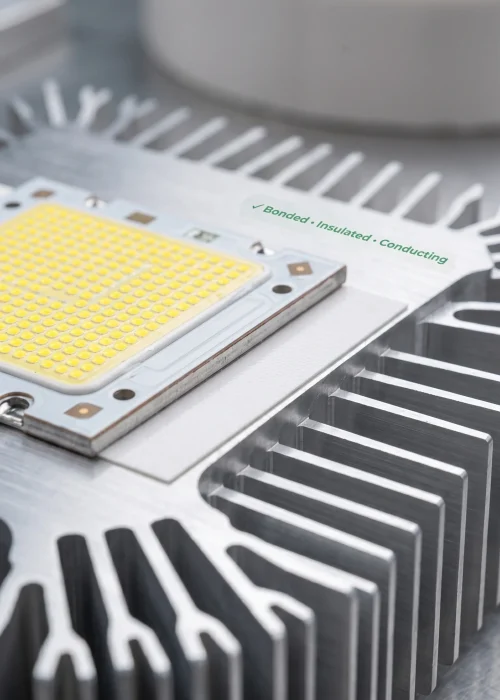
LED Luminaire & Backlight Assembly
TC-SAS tape bonds the LED PCB directly to an aluminium heatsink or chassis wall. Eliminates all screw holes from the heatsink design, enabling thinner luminaire profiles and faster assembly on automated lines.
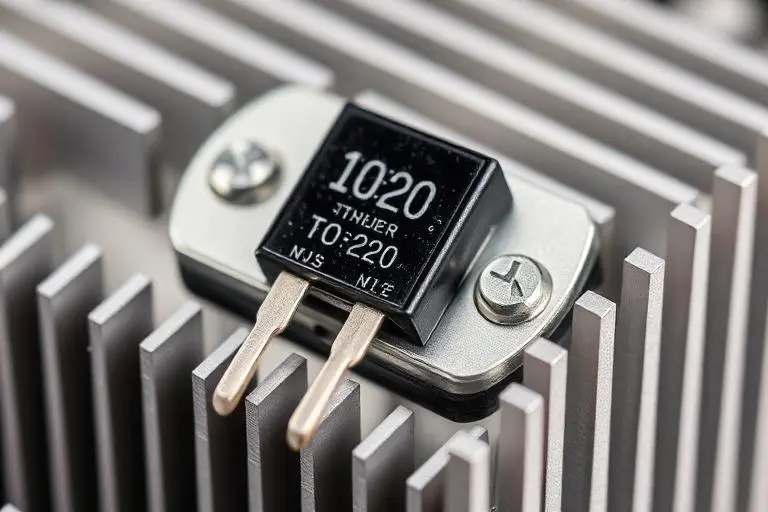
Transistor Mounting Without Screws
For low-profile or space-constrained PCB assemblies where screw access is impractical, TC-SAS tape replaces the screw-plus-insulator-sheet approach. The tape is placed between the transistor back and heatsink, pressing the stack eliminates the need for hardware.
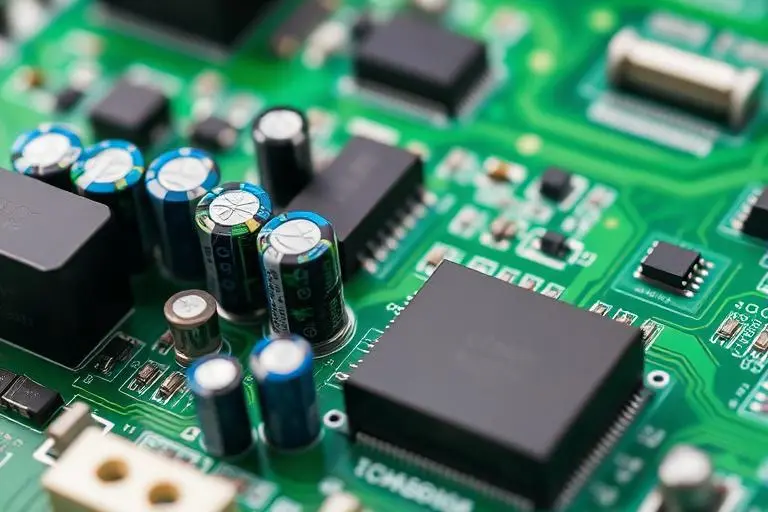
PCB Component to Chassis Bonding
Double-sided TC-SAS tape attaches heat-generating components directly to the chassis or thermal spreader in consumer electronics, flat-panel displays and set-top boxes — providing the thermal path and mechanical attachment in one step.

High-Temperature SMD Power Assemblies
TC-SAS tapes maintain bonding and thermal conductivity after 1,600 h at 150°C — making them the preferred tape for surface-mount power assemblies in industrial controls, telecom PSUs and automotive electronics operating near the 150°C service limit.
Datasheet
General Properties — TC-10SAS / TC-20SAS
General properties — ASTM E-1461 (thermal), JIS C 2338 (tape adhesion)
| Parameter | TC-10SAS | TC-20SAS |
|---|---|---|
| Thermal conductivity (W/m·K) | 1.0 | 1.0 |
| Thermal resistance (cm²·K/W) | 2.0 | 2.9 |
| Color | White | White |
| Standard size (mm) | 200×250 | 200×250 |
| Thickness (µm) | 100 | 200 |
| Dielectric breakdown voltage (kV) | 1.5 | 2.0 |
| Peeling strength vs. Aluminium (N/20mm) | ≥8 | ≥8 |
| Peeling strength vs. SUS (N/20mm) | ≥8 | ≥8 |
| Peeling strength vs. Glass-epoxy (N/20mm) | ≥8 | ≥8 |
| Aging: 1,600 h at 125°C — peel change | No significant change | |
| Aging: 1,600 h at 150°C — peel change | No significant change | |
| Aging: 1,600 h at 85°C / 85%RH — peel change | No significant change | |
| Service temperature range (°C) | −40 to +150 | |
| Flame resistance UL94 | V-0 (UL file E48923) |
Grade Selector
Choosing the Right Thermal Interface Tape India Grade
Choosing the right TC-TA grade comes down to four factors: thermal conductivity needed, thickness available, electrical insulation level required, and whether the design demands low LMW siloxane for contact-protection.
| Parameter | TC-10SAS | TC-20SAS |
|---|---|---|
| Total thickness (mm) | 0.10 | 0.18 |
| Thermal conductivity (W/m·K) | 1.0 | 1.0 |
| Peel strength (N/25mm) | 12 | 20 |
| Thermal resistance at 50°C·cm²/W | 1.1 | 1.6 |
| Best for | Thinnest bondline, smaller components | Higher peel force, larger component areas |
| Aging at 125°C (hours to spec) | Both rated >1,600 h — no significant change in peel force | |
| UL94 flame rating | V-0 (UL file No. E48923) |
FAQ
Thermal Interface Tape India — Common Engineer Questions
TC-SAS thermal interface tapes are electrically insulating — the silicone adhesive layer is filled with thermally conductive but non-electrically-conductive ceramic particles. This means the tape can be used between a live component and a grounded heatsink without a separate insulating layer, which is a common design advantage for LED strip bonding and automotive ECU attachment.
Yes. Both TC-10SAS and TC-20SAS maintain their peel adhesion specification beyond 1,600 hours of continuous exposure at 125°C, which corresponds to well over the typical automotive component qualification requirement. The silicone base also resists thermal shock across the –40°C to +180°C range, making it suitable for under-bonnet and in-cabin electronics.
TC-SAS tape is supplied with a polyester release liner on one or both faces. Peel the liner from one face, position the tape on the component or heatsink, press to activate the initial tack, then peel the second liner and press the component onto the heatsink with moderate, even pressure. Surface contamination — oil, dust or moisture — must be removed before application for full bond strength. Once bonded, TC-SAS is not repositionable without risk of damaging the adhesive layer.
Need Help Selecting a Thermal Interface Material?
Pantronics India — authorised Shin-Etsu distributor — provides datasheets, samples & engineering support across India.
Request a QuoteGet Engineering Support
Website
- Home
- Our Principals
- COOLIT
About Us
- <span data-metadata=""><span data-buffer="">About us
- <span data-metadata=""><span data-buffer="">Our Customers
- <span data-metadata=""><span data-buffer="">Customers Testimonials
- Principal Testimonials
Get in touch
- Address: A - 9, Sector - 67, Noida, U.P. - 201301 (India)
- Email sales@pankaj.biz
- Call us +91 7840051401
Resources
- Blogs
- Download Centre