Thermally Conductive Liquid Silicone Rubber Adhesives
The most versatile thermally conductive adhesive India range — Shin-Etsu KE series. One-component paste and liquid adhesives that cure to thermally conductive silicone rubber, simultaneously bonding, insulating and dissipating heat. Condensation cure (RT) and heat-cure addition variants for power electronics, ECUs and sensor housings.
0.85–4.0
W/m·K
V-0
UL94 (all grades)
1-component
Condensation or Addition
4.0 W/m·K
KE-1891 (highest)
Overview
What Are KE-Series Thermal Adhesives?
KE-Series adhesives are one-component, thermally conductive silicone rubber compounds supplied as pastes or liquids. Applied to a component by dispenser or spatula, they fill irregular shapes completely before curing to form a permanently bonded, thermally conductive elastomeric layer.
Condensation cure types (KE-4918-WF, KE-4961-W, KE-4962-W) cure at room temperature using ambient moisture. They release an alcohol byproduct during cure and should be used in environments with some ventilation or moisture access. Addition cure types (KE-1867, KE-1891) cure rapidly at 120°C with no byproduct gas — ideal for inline oven curing on production lines.
- Conforms to any component shape — paste fills irregular gaps before curing
- Condensation cure: room temperature, no oven required; requires moisture and ventilation
- Addition cure: 120°C × 1 h, no byproduct gas, predictable cure profile for production lines
- Simultaneously bonds, fixes, electrically insulates and dissipates heat
- KE-1891 reaches 4.0 W/m·K — highest conductivity in the adhesive range, matching G-787
- UL94 V-0 on all five grades; dielectric strength 23–27 kV/mm
Application Scenes
Where Phase Change Materials Are Used
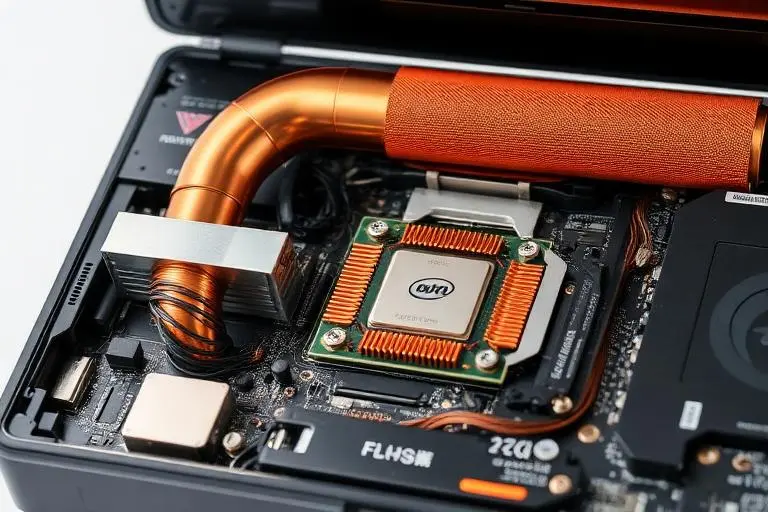
Compact Power Adapter / Charger
KE-4961-W or KE-4962-W condensation-cure adhesive is dispensed over transformer, FET and diode components inside compact laptop and phone charger housings — filling all irregular gaps and bonding the assembly while eliminating the need for pad-cutting.
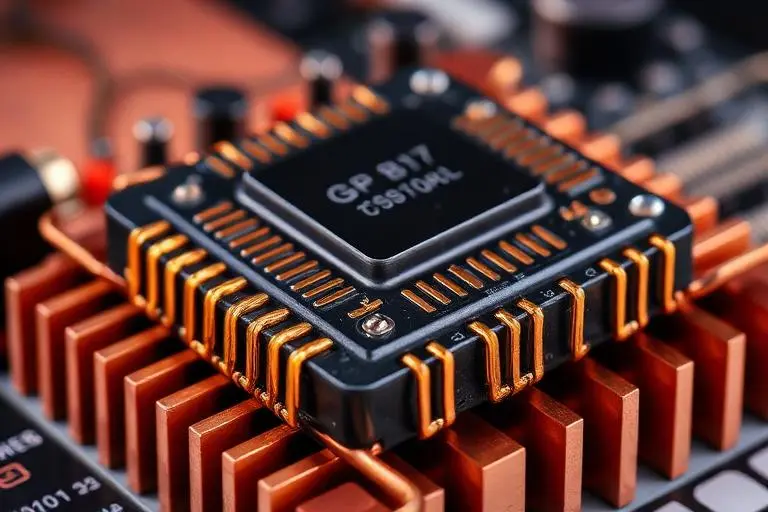
Irregular-Shape Hybrid ICs & RF Modules
KE-1867 and KE-1891 addition-cure adhesives bond hybrid ICs, RF power modules and custom-shaped power dies to aluminium or copper heat spreaders, providing both the permanent mechanical bond and the thermal interface in a single dispensed layer.
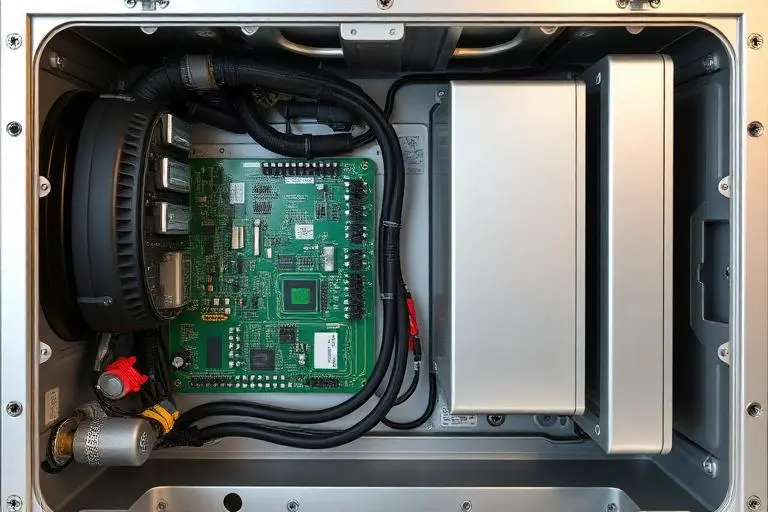
EV Inverter Control Board Bonding
KE-1891 (4.0 W/m·K) addition-cure adhesive bonds control board components to the EV inverter housing, providing high thermal conductivity, strong adhesive bond and UL94 V-0 compliance in a single process step within the oven-cure production cycle.

LED Fixture Assembly — Uneven Array
Where LED emitters are of varying heights and a flat pad cannot maintain contact with all elements simultaneously, KE condensation-cure adhesive is dispensed across the array — the paste self-levels to fill every gap before curing to a permanent thermally conductive bond.
Datasheet
General Properties — PCS SeriesGeneral Properties — KE Series Adhesives
Properties after cure — JIS R 2616 (thermal), JIS K 6249 (mechanical), JIS K 6850 (lap shear)
| Parameter | KE-4918-WF | KE-4961-W | KE-4962-W | KE-1867 | KE-1891 |
|---|---|---|---|---|---|
| Thermal conductivity (W/m·K) | 0.85 | 1.6 | 2.4 | 2.2 | 4.0 |
| Cure type | 1-component condensation | 1-component addition | |||
| Appearance (uncured) | White paste | White paste | White paste | Gray liquid | Grayish white paste |
| Byproduct gas | Alcohol | Alcohol | Alcohol | None | None |
| Curing conditions | 23°C / 50%RH × 7 days | 120°C × 1 h | |||
| Density at 23°C (g/cm³) | 1.68 | 2.34 | 2.65 | 2.92 | 3.06 |
| Hardness, Durometer A | 80 | 80 | 88 | 75 | 96 |
| Tensile strength (MPa) | 3.5 | 3.9 | 4.4 | 2.1 | 5.3 |
| Elongation at break (%) | 50 | 60 | 30 | 60 | 10 |
| Volume resistivity (TΩ·m) | 4.5 | 1.0 | 1.0 | 1.2 | 3.4 |
| Dielectric breakdown (kV/mm) | 27 | 24 | 25 | 23 | 25 |
| Lap-shear strength Al/Al (MPa) | 1.0 | 0.7 | 0.8 | 0.8 | 0.8 |
| Flame resistance UL94 | V-0 | V-0 | V-0 | V-0 | V-0 |
| LMW siloxane (ppm) | <300 | <300 | <300 | <300 | <300 |
Grade Selector
Choosing the Right Thermally Conductive Adhesive India Grade
KE-series thermally conductive adhesives India offer two cure mechanisms — room-temperature condensation cure and heat-accelerated addition cure — with conductivities from 0.9 to 1.3 W/m·K. Use this guide to match the cure type to your production process.
| Parameter | Condensation Cure (RTV) | Addition Cure (Heat) |
|---|---|---|
| Cure trigger | Atmospheric moisture; RT, 7 days to full cure | Heat 60–80°C, 30–60 min to full cure |
| By-product | Trace acetic acid or alcohol (grade-dependent) | No by-product — pure addition cure |
| Deep-section cure | Limited — cures from surface inward | Full — cures uniformly through depth |
| Primerless adhesion | Good to aluminium, silicone, glass | Excellent to most metals and ceramics with primer |
| Thermal conductivity (W/m·K) | 0.9–1.2 | 1.0–1.3 |
| Best for | Low-volume / manual assembly, field repair | High-volume production lines, oven or IR cure |
Note on conductivity: At 0.9–1.3 W/m·K, KE thermally conductive adhesive India grades are optimised for bonding — conductivity is significantly higher than unfilled adhesive (~0.2 W/m·K) but lower than dedicated thermal pads or gap fillers. Where both bonding and maximum heat transfer are needed, specify the adhesive type for bonding and a higher-conductivity pad or gap filler for thermal transfer if the geometry permits both.
FAQ
Thermally Conductive Adhesive India — Common Engineer Questions
Yes, in many applications. A cured KE adhesive bond simultaneously transfers heat, provides electrical insulation and mechanically fixes the component — eliminating the need for separate screws, clips or pads. However, the joint is permanent; rework requires cutting or peeling the cured silicone, which may damage delicate components. For field-serviceable designs, use a combination of mechanical fastener and thermal pad instead.
Condensation-cure KE grades bond primerlessly to clean aluminium, most metals, glass and silicone rubber with good peel and lap-shear strength. Addition-cure grades typically achieve better bond strength to ceramics and coated metals with an appropriate primer. Both types require surfaces to be free of oil, dust and moisture — clean with isopropyl alcohol before application. For specific substrate-adhesion data, request the technical datasheet from Pantronics India.
Condensation-cure (RTV) grades typically achieve handling strength within 30–60 minutes at 23°C and reach full mechanical and thermal properties after 7 days at 23°C / 50% RH. Addition-cure grades accelerated at 60–80°C in a conveyor oven reach full cure in 30–60 minutes — enabling production throughput at standard SMT post-reflow oven temperatures. Contact Pantronics India for process integration support.
Need Help Selecting a Thermal Interface Material?
Pantronics India — authorised Shin-Etsu distributor — provides datasheets, samples & engineering support across India.
Request a QuoteGet Engineering Support
Website
- Home
- Our Principals
- COOLIT
About Us
- <span data-metadata=""><span data-buffer="">About us
- <span data-metadata=""><span data-buffer="">Our Customers
- <span data-metadata=""><span data-buffer="">Customers Testimonials
- Principal Testimonials
Get in touch
- Address: A - 9, Sector - 67, Noida, U.P. - 201301 (India)
- Email sales@pankaj.biz
- Call us +91 7840051401
Resources
- Blogs
- Download Centre