
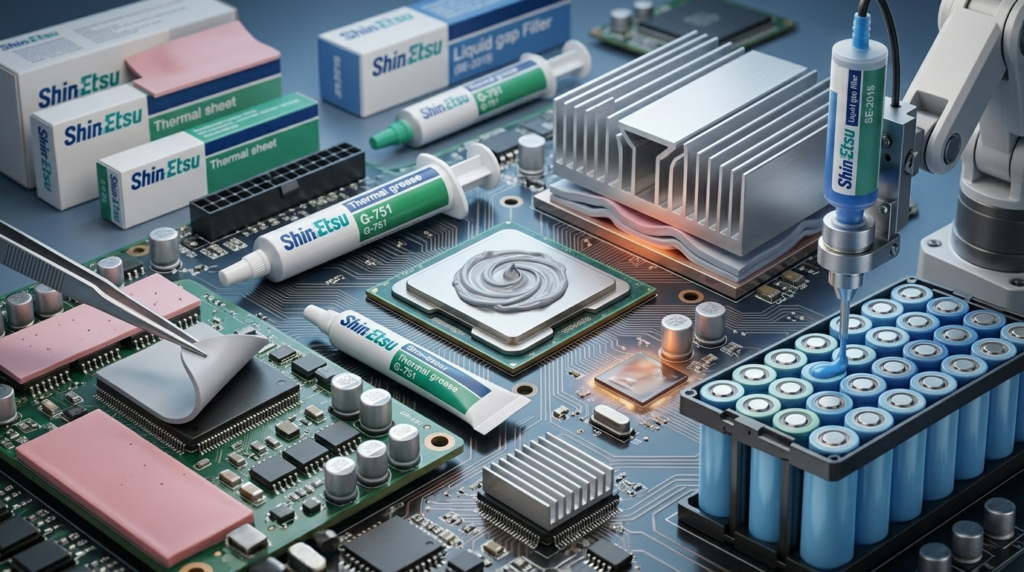
Why Thermal Management Can Make or Break Your Electronics
Every watt of power in modern electronics generates heat, which can threaten product lifespan and reliability without proper management. This is crucial for applications like EV battery packs and 5G infrastructure. Thermal Interface Materials (TIMs) are essential for controlling heat; options like thermally conductive silicone gap fillers and adhesives can reduce thermal resistance, eliminate hotspots, and significantly extend component life.
Why Selecting the Right Thermal Interface Material is the Top Design Challenge in Power Electronics
Power devices like IGBTs, MOSFETs, SiC modules, and GaN transistors generate significant heat under high current densities, necessitating efficient thermal management. Poor thermal management can lead to:
- Reduced efficiency and output quality
- Thermal runaway in battery systems
- Accelerated electromigration and dielectric breakdown
- Premature component failure and costly warranties
- Higher maintenance costs and less system uptime
Using the correct Thermal Interface Material (TIM) is crucial, as it fills air gaps between surfaces and creates a low-resistance thermal pathway, impacting product longevity.
The Complete Thermal Interface Material (TIM) Landscape
Not all Thermal Interface Materials (TIMs) are the same; each is designed for unique applications, assembly processes, and performance needs. Here’s an overview of key TIM types from Pantronics India.
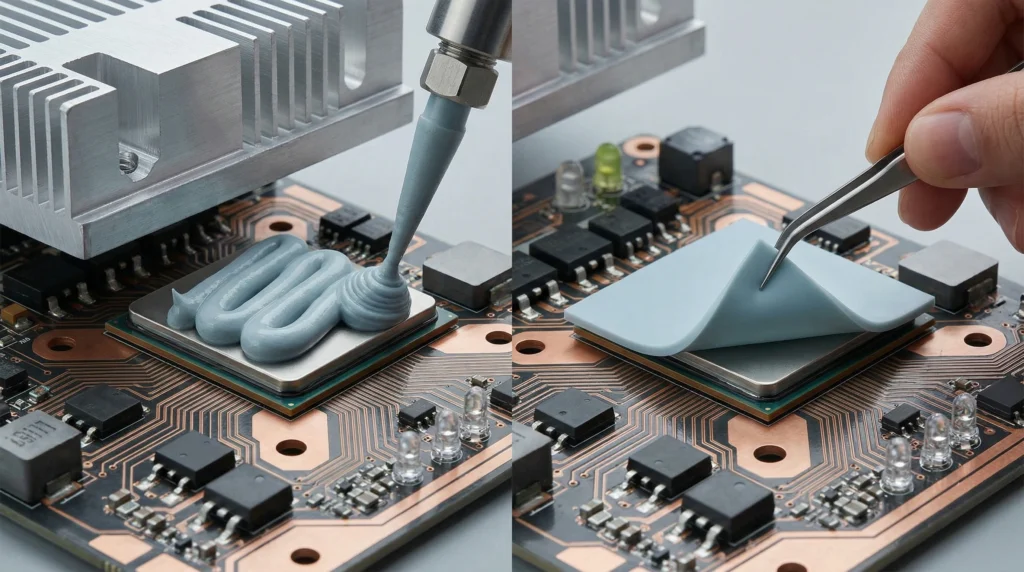
Thermally Conductive Silicone Gap Fillers, High-Performance Thermal Interface Material
Silicone-based gap fillers are essential for thermal management, available in pad and liquid forms. Shin-Etsu’s fillers ensure reliability over numerous thermal cycles with key features including:
- Thermal conductivity: 1.5 – 6.0 W/m·K
- Strong adhesion to metals, ceramics, and plastics.
- Operating temperature range: –60°C to +200°C
- Suitable for EV modules, power converters, and telecom equipment.
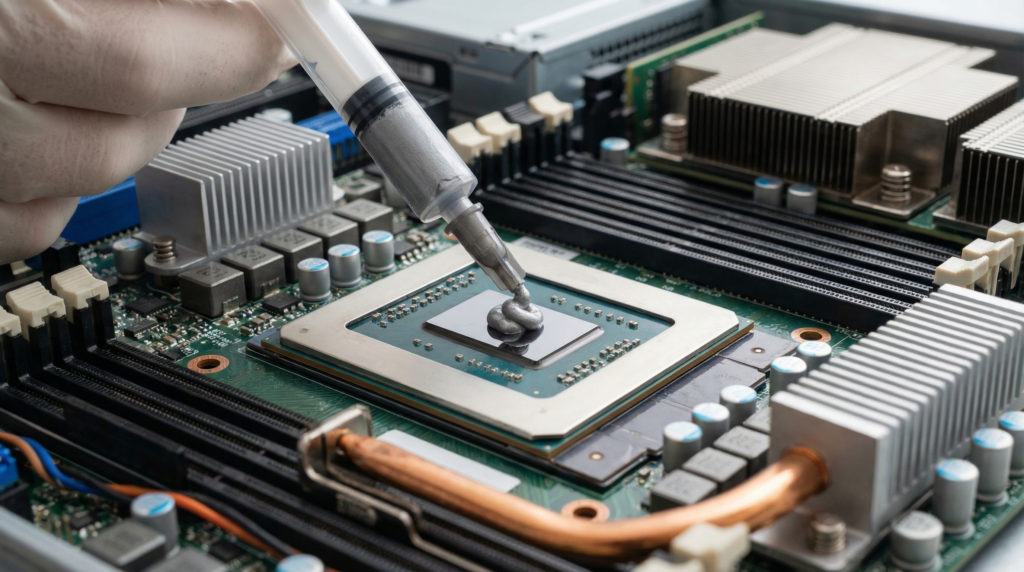
Thermally Conductive Grease: The Lowest-Resistance Thermal Interface Material
Thermally conductive grease provides minimal bond line thickness and optimal thermal performance at a low cost, ideal for applications needing disassembly like server and industrial cooling. It must be applied carefully to prevent pump-out during thermal cycles. Key features include:
- Thermal conductivity: 2.0 – 8.5 W/m·K (Shin-Etsu X-23 series).
- Very low thermal resistance at ultra-thin bond lines.
- Suitable for flat, well-mated surfaces.
- Best for server CPUs, power modules, and RF amplifiers
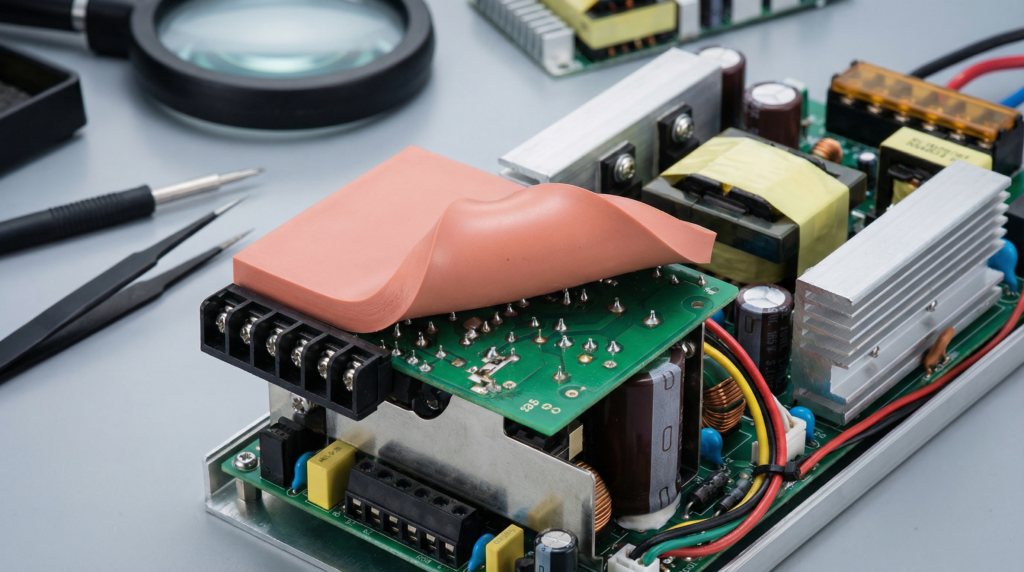
Thermal Pads & Thermal Gap Pads Easy-to-Apply Thermal Interface Materials
Thermal pads are solid, electrically insulating pads, ideal for mass production due to their ease of use and consistency. Shin-Etsu’s Thermal Gap Pads offer excellent conformability and come in various hardness and conductivity options. Key features include:
- Thermal conductivity: 3.0 – 10.0 W/m·K
- Electrically insulating for PCB-to-heatsink use
- Consistent thickness for automated assembly
- Temperature resistance up to 200°C
- Common applications: LED drivers, SMPS, industrial power supplies.
Liquid Gap Fillers (Dispensable TIMs)
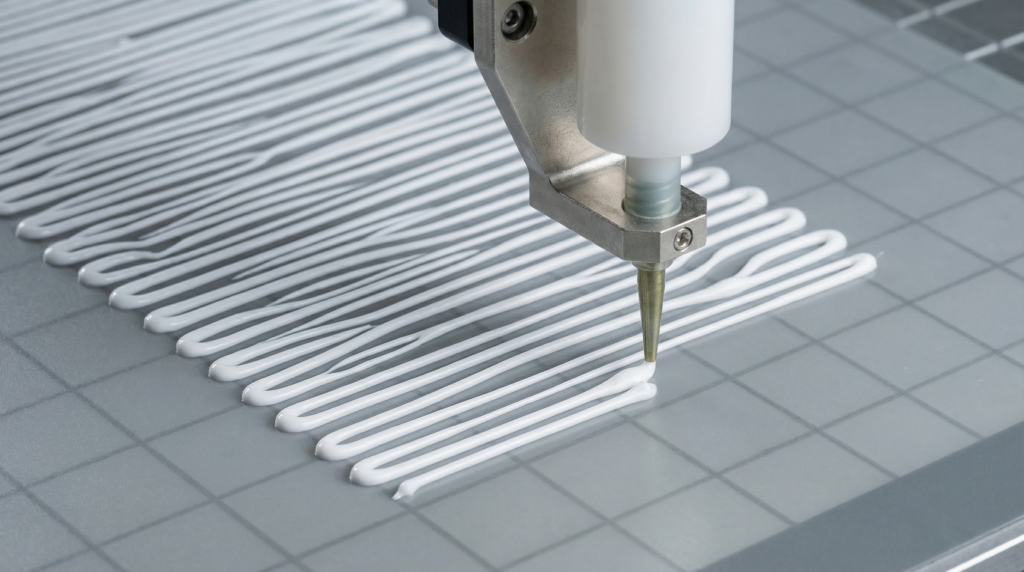
Liquid gap fillers are advanced thermal interface materials that cure into soft elastomers, overcoming the limitations of rigid pads. Key features include:
- Thermal conductivity: 2.5 – 6.5 W/m·K
- Excellent conformability for irregular surfaces
- No pump-out or phase separation
- Compatibility with robotic dispensing systems
- Primary applications in EV battery packs, power inverters, and on-board chargers.

Thermally Conductive Adhesives: Bonding Thermal Interface Materials for Electronics
Thermally conductive adhesives bond components while transferring heat, eliminating mechanical fasteners to simplify assembly. Shin-Etsu offers one-part and two-part systems in epoxy and silicone chemistries, featuring:
- Thermal conductivity: 1.0 – 4.5 W/m·K
- Permanent bonding with excellent thermal paths
- Fast-cure and high-temperature options
- Ideal for LED mounting, power module substrates, and heat sink bonding.

Phase Change Materials (PCMs)
Phase change materials (PCMs) transition from solid to liquid between 45°C and 65°C, reducing contact resistance by filling surface irregularities. Upon cooling, they solidify and stay in place without pump-out, offering performance similar to thermal grease and the ease of thermal pads. Key features include:
- Phase transition temperature: 45°C – 65°C
- Excellent surface wetting during operation
- Minimal thermal resistance, comparable to thermal grease
- Easy pre-application at room temperature
- Suitable for processors, IGBT modules, and base station equipment.
TIM Selection Guide — Quick Comparison Table
Use this expert reference table to shortlist the right thermal interface material for your application:
| TIM Type | Best For |
|---|---|
| Thermally Conductive Silicone Gap Filler | EV modules, power converters, general-purpose thermal management |
| Thermally Conductive Grease | CPU cooling, RF amplifiers, high-performance power modules |
| Thermal Pads / Thermal Gap Pads | Mass production, electrically isolated assemblies, LED drivers |
| Liquid Gap Fillers | EV battery packs, complex geometries, automated assembly |
| Thermally Conductive Adhesives | LED mounting, heat sink bonding, no-fastener designs |
| Phase Change Materials | IGBT modules, processors, base stations, high-cycle applications |
Choosing the Right Thermal Interface Material: 5 Key Engineering Questions
Selecting the optimal TIM for your application requires answering these five critical questions:
Q1. What is the gap size and surface condition?
- Flat, smooth surfaces with gaps < 0.5 mm → Thermal grease or Phase Change Material
- Moderate gaps (0.5 – 2 mm), uniform → Thermal Gap Pads or Thermal Pads
- Large or irregular gaps (1 – 5 mm) → Liquid Gap Fillers or Silicone Gap Fillers
Q2. What thermal conductivity do you need?
- Light heat loads (< 5 W/cm²) → 1.5 – 3.0 W/m·K TIMs are sufficient
- Medium heat loads (5 – 15 W/cm²) → 3.0 – 6.0 W/m·K recommended
- High heat loads (> 15 W/cm²) → 6.0+ W/m·K, consider liquid gap fillers + active cooling
Q3. Is electrical insulation required?
- Yes (PCB to heatsink, cell to cooling plate) → Thermal Pads or Silicone Gap Fillers
- No (processor to IHS) → Thermal Grease for maximum performance
Q4. What are your assembly process constraints?
- Manual assembly, small batches → Pre-cut Thermal Pads or Phase Change Materials
- Automated, high-volume production → Liquid Gap Fillers with robotic dispensing
Q5. What environmental conditions will the TIM face?
- Extreme temperatures, vibration, or high thermal cycling → Silicone-based liquid gap fillers
- Moisture, humidity, or chemical exposure → Shin-Etsu silicone products offer superior resistance
- High electrical stress → Verify dielectric strength specs before selection
Shin-Etsu Chemical Co., Ltd.: Global Benchmark in Thermal Interface Materials and Japan’s No. 1 in Silicone Innovation
Shin-Etsu Chemical Co., Ltd. is the leading global manufacturer of silicone-based thermal interface materials (TIMs) with over 75 years of expertise. Their TIMs are trusted by top electronics manufacturers in various sectors, including automotive and aerospace. Key features include:
- Industry-leading thermal conductivity with minimal filler
- Superior long-term stability (no silicone oil bleed, pump-out, or phase separation)
- Comprehensive product range (grease, pads, gap fillers, adhesives, PCMs)
- Compliance with REACH, RoHS, and IATF 16949 standards
- Ongoing R&D for next-generation materials in emerging applications.
Future Trends in Thermal Interface Materials: What's Next
Future trends in Thermal Interface Materials (TIM) are shaped by increasing power densities and the demand for compact, reliable electronics. Key trends for 2025 and beyond include:
- Ultra-high conductivity fillers like boron nitride and graphene (10+ W/m·K)
- Low-pressure dispensing materials for delicate wearables and medical devices.
- Integration with two-phase liquid cooling for data center GPU clusters
Self-healing silicone composites that repair micro-fractures. - Thinner bond lines with improved conductivity for next-gen SiC and GaN power devices.
Conclusion
Choose the Right Thermal Interface Materials Partner for Your Power Electronics
Thermal management is not a detail — it is a core engineering discipline. The right Thermal Interface Material, whether a Thermally Conductive Silicone Gap Filler, Liquid Gap Filler, Thermal Gap Pad, Thermally Conductive Grease, Phase Change Material, or Thermally Conductive Adhesive, can mean the difference between a product that leads the market and one that fails in the field.
With power densities rising across every application — from EV battery packs to 5G base stations to industrial automation — the demand for high-performance TIMs has never been greater. And with India’s electronics manufacturing ecosystem growing at an unprecedented pace, having a trusted local partner who understands both the global material science and the local application landscape is essential.
Pantronics India is the authorized distributor of Shin-Etsu — Japan’s No. 1 and a Global Leader in Silicone & Thermal Interface Solutions. From application engineering support and sample supply to volume procurement and technical consultation, we are your end-to-end partner for thermal management excellence
Frequently Asked Questions About Thermal Interface Materials (TIMs)
Thermal Pads (or Thermal Gap Pads) are solid sheets used between components for uniform surfaces, while Liquid Gap Fillers are liquid that cures into a flexible elastomer, suitable for complex shapes and larger areas. Liquid fillers typically have lower thermal resistance as they prevent air entrapment, unlike pads, which may leave small gaps on uneven surfaces.
Thermally Conductive Grease is ideal for low thermal resistance in thin bond lines with flat, smooth surfaces and is suitable for applications needing periodic disassembly, like power modules or processor heat sinks. However, it can pump out under thermal cycling, making Liquid Gap Fillers or Phase Change Materials better for high-cycle applications.
Shin-Etsu’s thermally conductive silicone gap fillers are designed for EV battery packs, providing excellent thermal conductivity (up to 6+ W/m·K), electrical insulation, and reliability over many thermal cycles. Their low modulus protects fragile battery cells from mechanical stress during thermal expansion and contraction.
Phase Change Materials (PCMs) are thermal interface materials that melt at specific temperatures (45°C to 65°C) and flow to wet surfaces during device operation. Upon cooling, PCMs re-solidify, offering performance similar to thermal grease at operating temperatures while remaining solid and manageable at room temperature. They are ideal for applications with flat surfaces and moderate-to-high heat loads.
Pantronics India is the authorized distributor of Shin-Etsu thermal interface materials, offering a complete range of products, including greases, gap fillers, thermal pads, adhesives, and phase change materials. They provide local application support, technical consultation, and reliable stock availability. For specific requirements, datasheets, or product samples, visit pantronicsindia.com or contact their team.

Expert Technical Support
Looking to select the right Thermal Interface Material for your power electronics application? Whether you’re designing EV battery packs, industrial inverters, or telecom infrastructure, we can help you specify the right TIM, evaluate options, and get your thermal management right the first time
Ms. Pooja (Thermal Interface Materials Expert )
Mail ID: pooja@pantronicsindia.com