
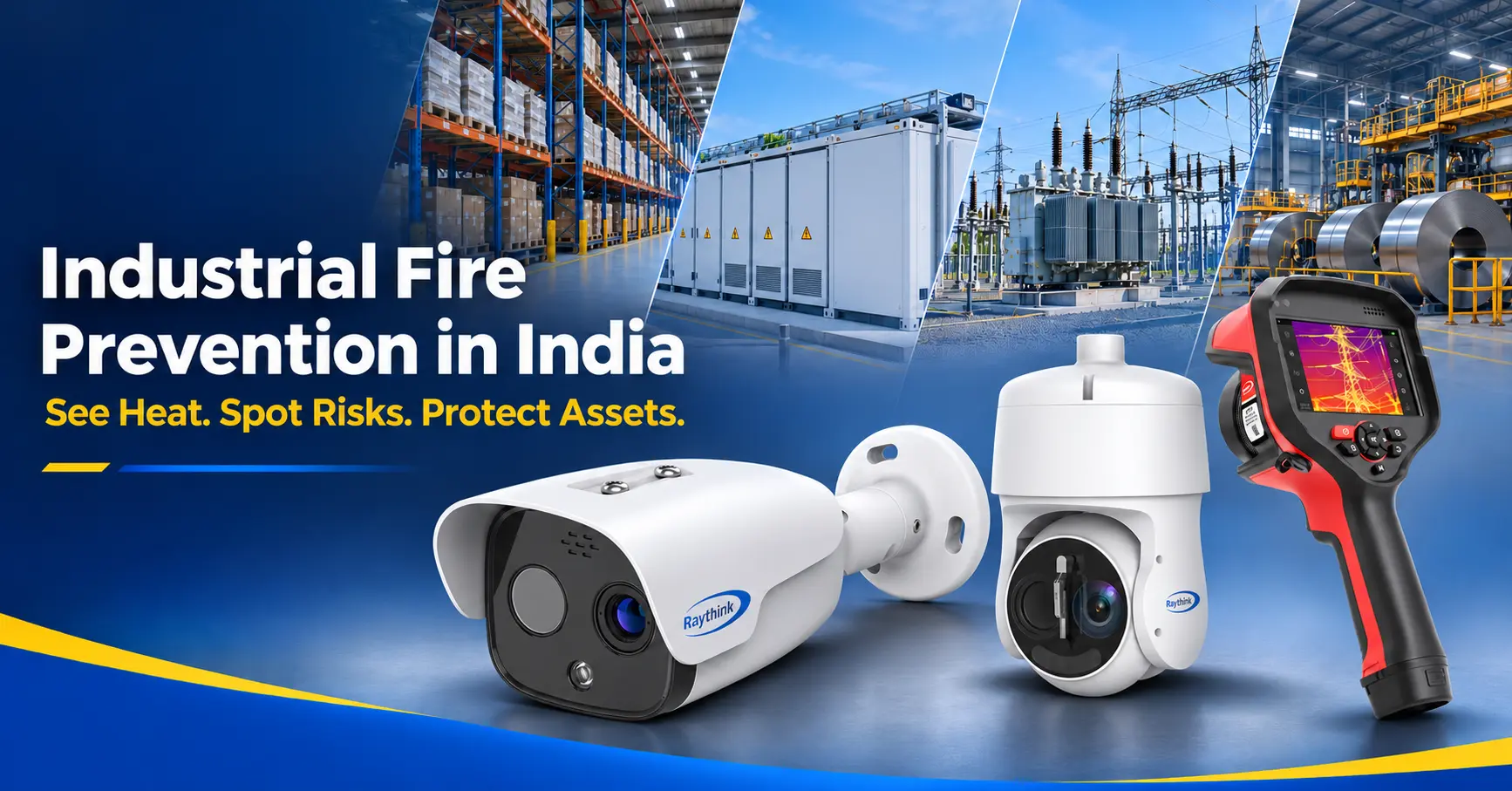
A hot joint in a panel. A battery rack running warmer than it should. A corner of the coal pile quietly heating up. Here's where a thermal camera earns its place on site, and where it doesn't.
Most industrial fires don’t start with flames. They start with something small getting hot: a lug that was never torqued properly, a bearing running dry, a battery module sitting a few degrees above its neighbours, a patch of stored material warming up from the inside.
You’d probably walk right past all of these on a routine round. And if the equipment sits in a corner nobody visits between rounds, or the night shift is short-staffed, the problem has hours to grow before anyone notices.
There’s no single fix for industrial fire prevention in India. It takes sound engineering, regular maintenance, proper detection and a response plan your people have actually practised. Thermal imaging adds one more layer on top of that. It shows you where a surface is hotter than it should be, so someone can go and check before it turns into a fire.
The short version
A thermal camera can catch overheating on the surface of whatever it’s pointed at. How much it helps comes down to three things: what it covers, how well it measures, and what your team does when it raises an alert. It works alongside your fire protection system. It won’t catch every ignition source, and it was never meant to.
01 / THE PROBLEM
Real incidents: what industrial fire prevention must address
Fire incidents should inform risk assessments without becoming evidence that a particular camera would have prevented them.
21 AUGUST 2024 · ANDHRA PRADESH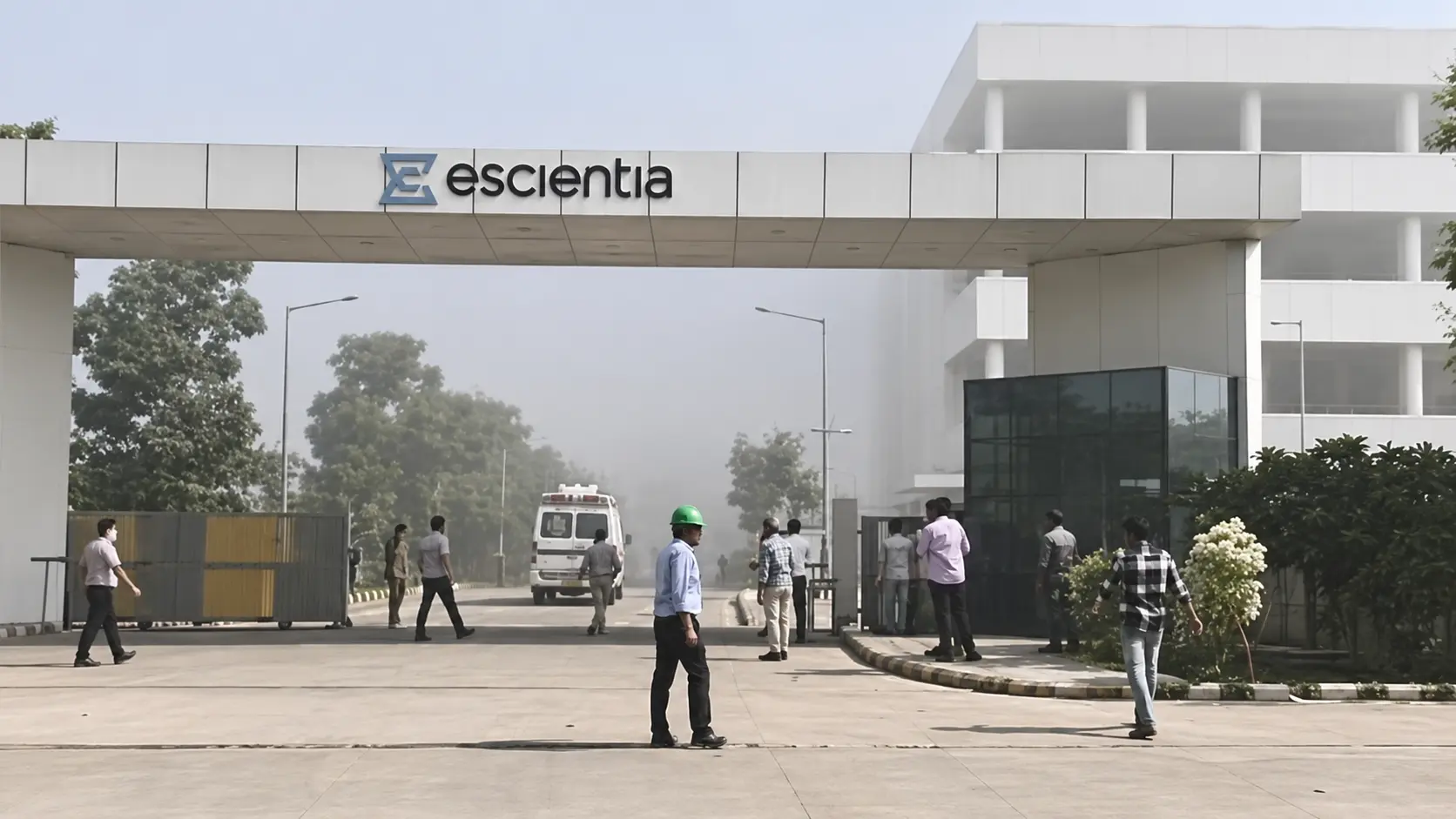
Pharmaceutical factory explosion
At least 17 people died after an explosion at Escientia Advanced Sciences. Reuters later reported that an internal government report traced the blast to a solvent leak, with a vapour cloud forming near an electrical panel.
What it teaches us: process containment, gas detection and control of ignition sources all have to work together. A standard temperature-monitoring camera can’t see flammable vapour, so it simply isn’t the tool for that job.
23 MAY 2024 · DOMBIVLI, MAHARASHTRA
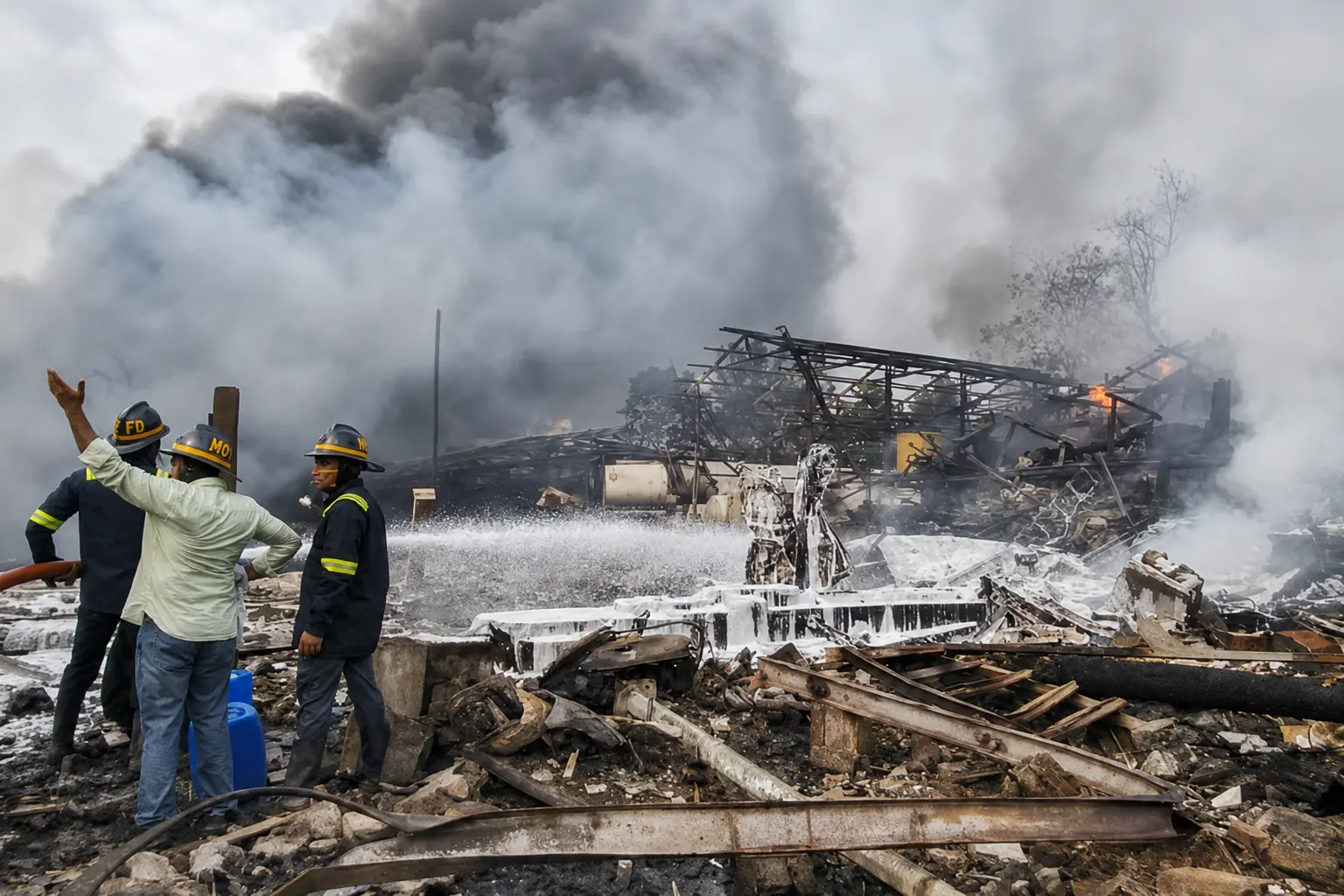
Chemical factory explosion and fire
Associated Press reported that an explosion and fire at a chemical factory in Thane district caused damage to nearby factories and homes.
What it teaches us: think about how far a fire could travel, not only where it might start. Monitoring should sit inside a bigger plan that covers separation, fire protection, access for emergency crews and evacuation.
13 MAY 2022 · MUNDKA, DELHI
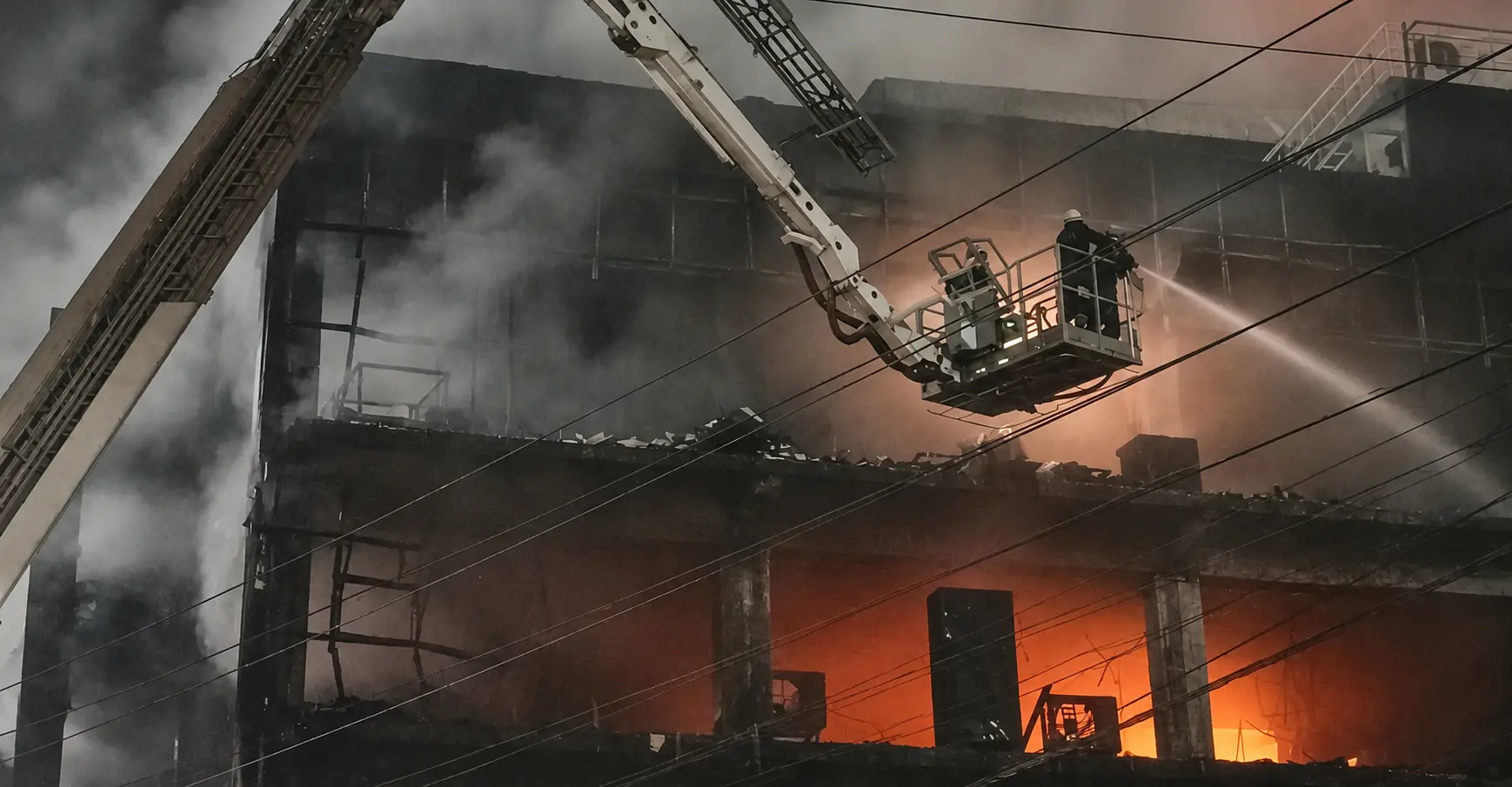
Commercial building fire
A large fire broke out in a building that housed the office of a company making surveillance cameras. Reuters reported a long rescue operation and several deaths.
What it teaches us: an early warning is only worth something if people act on it. Clear escape routes and a working evacuation plan matter just as much as detection.
02 / HIDDEN RISKS
Where should you be looking?
Start with the equipment and ask how it usually fails. The table below lists places worth reviewing with your maintenance, operations and EHS teams. Treat it as a shortlist to discuss, not a diagnosis. A thermal image on its own can’t tell you what’s wrong.
| Area | What to look out for | How a camera can help |
|---|---|---|
| Electrical distribution | Joints and components in view that are running hot | Compare readings at similar loads, so you're comparing like with like |
| Motors and conveyors | Bearings and drives getting warmer than usual | Spot the change and send someone to check |
| Battery rooms and BESS | Warm spots on exposed batteries, racks or connections | Give an outside view to go with your BMS and other monitoring |
| Warehouses | Hot spots on machinery and stock you can see | Watch set zones where a hot spot would show up |
| Coal, biomass and waste | Surface hot spots that point to heating underneath | Pick up exposed anomalies so someone can investigate |
| Process equipment | Unexpected outside heat, or patterns that shift over time | Help where the outer surface actually tells you something |
| Outdoor electrical yards | Heating on equipment and connections in view | Keep an eye on chosen assets from a good vantage point |
The key question: will the developing fault create a measurable temperature change on a surface the camera can see?
03 / THE SOLUTION
How thermal imaging helps you catch trouble early
A radiometric thermal camera reads the infrared energy coming off a surface and works out its temperature. Your operators then look at the image and the readings to spot anything out of the ordinary.
Picture three similar connections on the same panel, all carrying roughly the same load. Two look the same and the third is clearly hotter. That’s your cue to inspect it properly, before a loose joint turns into a burnt one.
- Observe defined assets between manual inspection rounds.
- Identify where an abnormal temperature appears.
- Record thermal information for investigation.
- Generate configured alerts for operator attention
Earlier warning is possible—not guaranteed.
Many faults heat up before they ignite, and that’s the window a camera can catch. But some failures happen suddenly, some are hidden from view, and some chemical events move so fast there’s little or no heat to see beforehand.
Understand the measurement limits
Conventional industrial thermal cameras cannot see through walls or closed metal enclosures. Ordinary glass obstructs direct thermal observation of equipment behind it. Shiny surfaces can reflect surrounding heat.
Measurement quality depends on emissivity, reflected temperature, distance and viewing conditions. A bright area needs interpretation before it is labelled a dangerous hotspot.
04/ INDUSTRY APPLICATIONS
Where thermal monitoring can fit
Electrical panels, substations and manufacturing
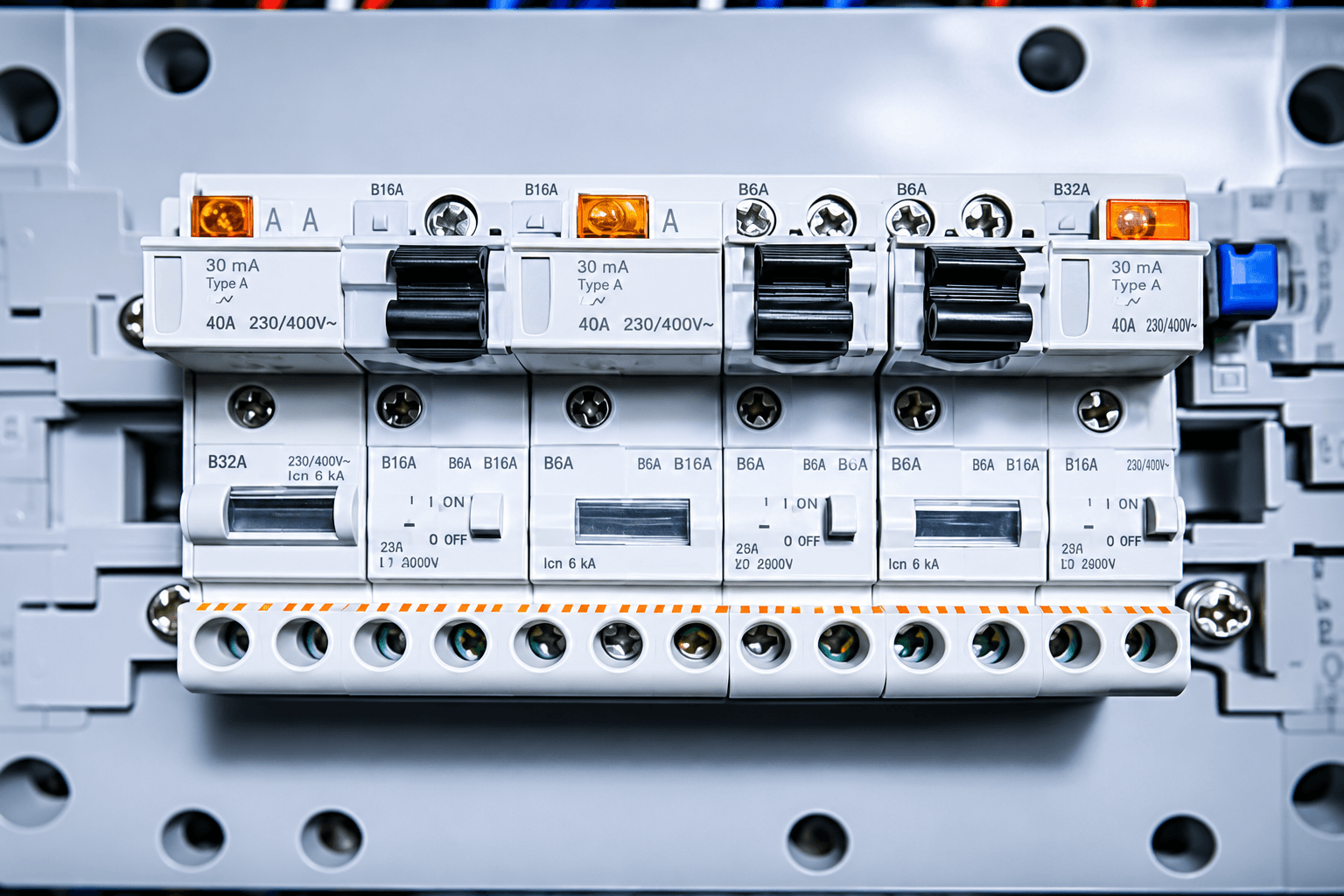
Start with critical distribution assets and the consequences of losing them. Define the components, normal loads and a safe thermal viewing arrangement. An external camera does not directly measure connections behind a closed panel.
Handheld cameras suit periodic surveys. Fixed cameras are for keeping a constant eye on specific assets that are in clear view.
Lithium-ion battery rooms, EV facilities and BESS
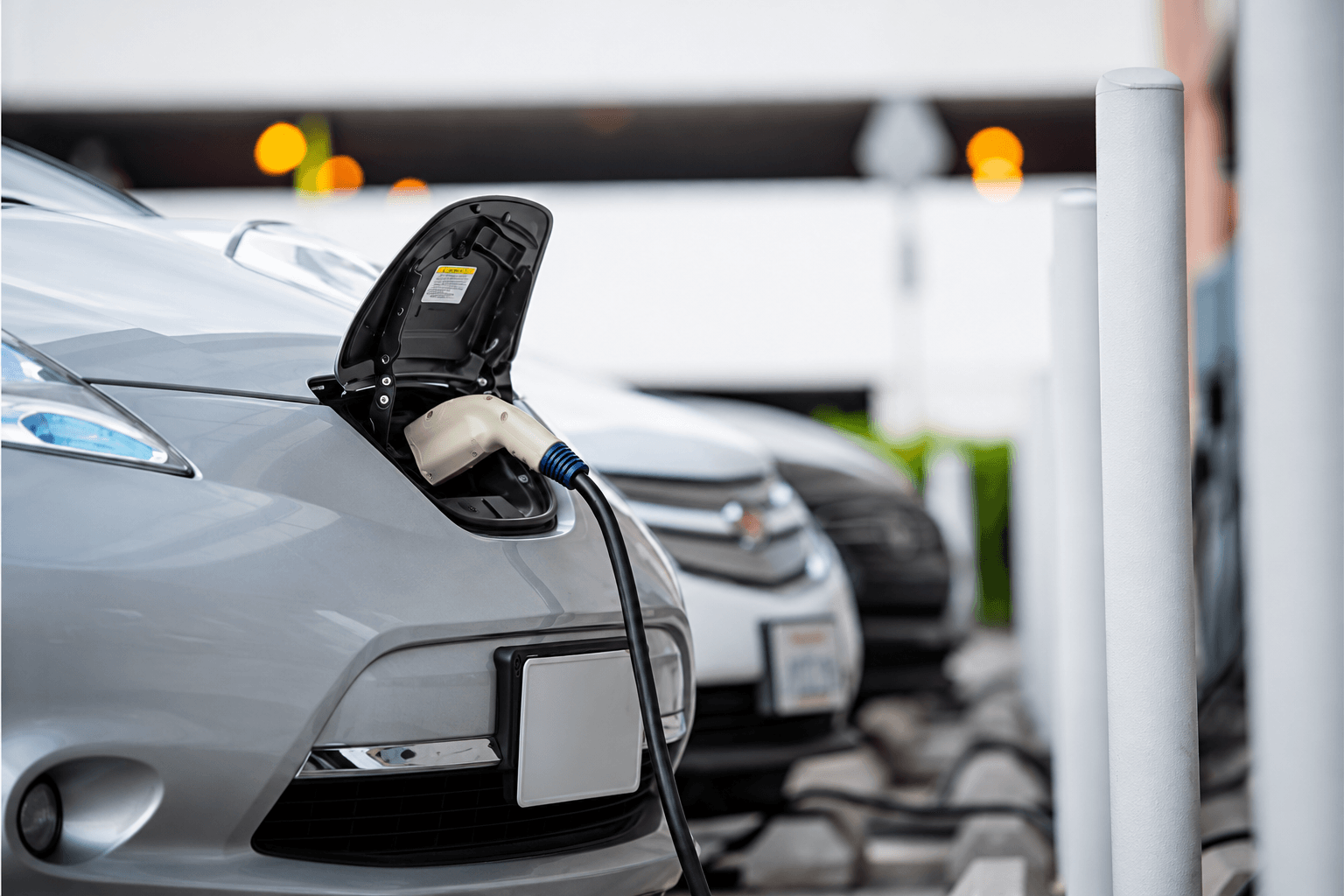
An external camera observes exposed surfaces; it does not measure every cell’s internal condition. Assess visibility of racks, packs, terminals and interconnections.
Use thermal monitoring within a coordinated design considering the battery management system, appropriate detection, ventilation, isolation and emergency response. NFPA’s stationary energy storage standard addresses multiple protection layers, including detection, suppression and thermal runaway.
Warehouses and logistics facilities
Pallets move, storage heights increase and racks obstruct previously clear views. Identify observation zones and maintain coverage as stock changes. Suitable targets may include accessible electrical equipment, machinery and exposed material surfaces.
Coal yards, biomass, cement and waste facilities
A distant camera may show an entire yard while providing insufficient detail to measure a small hotspot. Surface monitoring cannot guarantee detection of heating buried deep inside a pile. Define how personnel investigate alerts safely.
Steel, metals and high-temperature processes
Hot equipment is normal here. Distinguish expected process temperatures from abnormal conditions. Check measurement range, mounting position, ambient limits and exposure to dust or radiant heat.
Chemical, pharmaceutical and hazardous areas
Hot equipment is normal here. Distinguish expected process temperatures from abnormal conditions. Check measurement range, mounting position, ambient limits and exposure to dust or radiant heat.
Data centres, renewable energy and transport
UPS systems, battery rooms, inverter stations, distribution equipment and maintenance facilities contain assets worth assessing. Read our related guide to thermal imaging for data centre predictive maintenance.
Where are your critical thermal blind spots?
Share your layout, asset list and operating conditions to discuss suitable observation points.
05/ PRODUCT SELECTION
Raythink cameras: match the product to the problem
Raythink offers different formats for industrial measurement, dual-spectrum observation and wider-area monitoring. These models are candidates for assessment, not interchangeable recommendations.
Dual-spectrum bullet

FC465T
Thermal and visible imaging with temperature analysis and fire detection.
Assess for: Fixed monitoring of defined areas.
Manufacturer details ↗Fixed industrial thermography

TN460
Industrial temperature measurement with lens options, Modbus, ONVIF and SDK support.
Assess for: Equipment monitoring and automation integration.
Manufacturer details ↗Dual-spectrum speed dome

PD464T
Thermal imaging and visible optical zoom in a movable speed dome.
Assess for: Scanning and monitoring large outdoor areas.
Manufacturer details ↗Explosion-proof dual-spectrum

TE365
Thermal and visible imaging in a stainless-steel explosion-proof housing.
Assess for: Hazardous areas, subject to certification and installation checks.
Manufacturer details ↗Before you specify anything, confirm the current model variant, lens, measurement functions and interfaces. Also bear in mind that a camera that moves can’t watch every spot at once. If an asset needs constant observation, consider giving it a fixed camera of its own.
See the full range of Raythink thermal imaging solutions from Pantronics India.
06/ MAKE IT WORK
Turning a thermal image into action
Define the asset and failure mode.
Identify what could overheat, how it might become visible and the consequence of missing it. Prioritise by risk and operational importance.
Design around the smallest relevant target.
Record target size, distance, mounting height and obstructions. Detector resolution, lens and distance together affect useful detail.
Establish normal behaviour.
Observe representative loads and operating conditions before deciding what counts as abnormal.
Configure and validate alerts.
Develop thresholds around the equipment, material and process. Where supported, assess trends, persistence and comparison rules. Avoid one alarm temperature for unrelated assets.
Verify integration.
Confirm camera interfaces, operator notifications and any additional programming. A network protocol alone does not establish fire alarm panel compatibility or a safety shutdown function.
Assign responsibility and maintain coverage.
Decide who receives the alert, who checks it and who acts on it. Add lens cleaning, view checks, communication failures and alarm testing to your maintenance routine.
07 / NEXT STEPS
Make overheating visible. Make the response clear.
Preventing industrial fires comes down to understanding how hazards build up and having the right controls in place. Thermal imaging helps by showing you abnormal surface heat on the assets you choose to watch.
It works best when coverage is planned carefully, readings are interpreted by people who know the equipment, and every alert has a named person responsible for it.
Talk to Pantronics India about your application
Pantronics is an authorised Raythink distributor in India, and we can help you with both handheld and online thermal imaging products. To make the first conversation useful, it helps if you can share:
- The asset or material and the area dimensions.
- A layout or photograph and proposed viewing distance.
- Normal and abnormal temperature conditions.
- Indoor, outdoor or hazardous-area installation details.
- Required alarms and existing monitoring systems.
Protect your critical assets with a clearer view of heat.
Let's talk through Raythink camera options, how much coverage you need and how it ties into your existing systems.
Frequently Asked Questions (FAQ)
Sometimes, yes. If the heating is happening on a surface the camera can see, it may pick it up before there’s any visible smoke. How well that works depends on how the fault develops, what the camera can see, how much it covers and how the alarms are set. Nobody can promise a fixed amount of warning time.
No. Think of thermal monitoring as an extra layer. It doesn’t do the job of smoke, flame or gas detectors, fire alarms or suppression systems.
There isn’t one model that’s best for everything. The right choice depends on how big the target is, how far away it is, the temperature range, the environment, how much area you need to cover and what the camera has to connect to.
Not a standard camera mounted outside it, because thermal cameras can’t see through metal. To watch inside, you need a properly engineered viewing or monitoring arrangement that suits that equipment.
A camera tells you about heat it can see on the outside. It can’t guarantee prevention, and it won’t spot every internal cell fault. Batteries need detection, controls and emergency arrangements all working together.
It depends on the layout, target size, distance, obstructions and how often each area needs to be watched. Floor area alone won’t give you the answer.
Get in touch with Pantronics India, an authorised Raythink distributor in India, and tell us a little about your application.

Need help choosing a thermal camera for your facility?
Share your site layout, critical assets and monitoring distance. Our technical team can help you choose between handheld inspections and continuous monitoring, and discuss camera placement and alarm integration.
Mr. Akash Raj (Thermal Camera Expert)
Mail ID: a.raj@pantronicsindia.com